- Print This Post Print This Post

By John Helmer, Moscow

 The new rules-based order.

That’s an expression invented by western politicians for their schemes of Russia warmongering, and for their media, universities and think-tanks to promote the military budgets required.  

In this month’s case of Chrystia Freeland, the Canadian foreign minister  scheming to replace Prime Minister Justin Trudeau in time to win the election eight months away, the expression means her  rules-based order, not anyone else’s rules-based order. Freeland means Ukrainian rules, not Russian rules; US rules, not Venezuelan rules; Canadian court rules, not Chinese court rules;  and most of all, she means Freeland to rule, not Trudeau to rule.

In Moscow, according to Foreign Minister Sergei Lavrov, “we saw the attempts to usurp multilateral institutions, erode their interstate character and replace universal norms of international law by a sort of rules-based order. This term hides the desire to invent rules based on the political environment and in the interests of using them as a tool for exerting pressure against targeted states, and very often against their allies.” 

In Russia since January 1, there is a new rules-based order.

It’s for fishing in the domestic rivers and lakes. Millions of amateur and sports fishermen across the country are up in rods and nets, if not up in arms, over what the rules will do to them. They accuse the government in Moscow of privatizing the fish with rules to reserve the choicest fishing spots for affluent angling clubs, hotels, foreign tourist companies,   and other outsiders with money the locals lack. By limiting the amateurs to single-line rods and by prohibiting nets,  the new rules-based order makes sure the fish stay plentiful where the well-heeled fishermen want them, turning everyone else into poachers. In this new rules-based order, poachers are easier to net than fish. (more…)

- Print This Post Print This Post

By John Helmer, Moscow

O dear! O dear me! O dearie, dearie me!

William Burns is the man who might have been US Secretary of State if Hillary Clinton had been elected President in November 2016. Since then he has been composing an apologia pro vita sua — a book of religious convictions describing what went wrong through no fault of his own or of God’s, explaining what a victim Burns and the United States have been of bad luck; bad timing; President Donald Trump’s “narcissism”, “erratic leadership” and “active sabotage”; and Russian malevolence.

To the ex-Ambassador to Russia and ex-Deputy Secretary of State, the Russian evil is a motiveless, psychopathological crime. Russians, especially the few high-ranking ones Burns met as a State Department apparatchik, can’t help themselves. There is no cause and effect between action and reaction, between US offence and Russian defence. Nothing Christian Brothers alumni and missionary Americans like Burns have done explains (in Burns’s tract) why the Russians behave so badly, and why their souls must forever burn in hell unless they repent. Five hundred pages of holier-than-thou, confessor to the wicked Russians — that’s been the Burns mission. (more…)

- Print This Post Print This Post

By John Helmer, Moscow

When India, one of Russia’s largest and longest-serving allies, was attacked by Pakistan in Kashmir since mid-February, the Kremlin sent condolences, expressed hope for a “prompt settlement”, and authorized Foreign Minister Sergei Lavrov to offer to mediate between the ally and its enemy.  “Russia is ready to offer a negotiating platform for India and Pakistan to settle relations”, Lavrov told the state news agency Tass. “If they want to,  of course.”  The display of Russian equanimity and neutrality between its Indian ally and Pakistan, long a US ally, has produced open anger in the Indian media; dismay among senior Indian politicians, civilian officials and military officers.

“Indians would not admit it,” comments an influential Indian in Moscow, “but there are signs that Putin is fence-sitting. Lavrov even proposed mediation. That would be like India proposing to mediate between Russia and Ukraine over Crimea. On the one hand, Lavrov says India and China will shape the new world order, but on the other,  he talks like a [US] State Department spokesman.”

For the India-Russia alliance, the question Indians ask is: if not now, then when? Russia’s other strategic allies – China, Syria, Cuba, Venezuela – ask the same thing.  (more…)

- Print This Post Print This Post

It was in February 1989, thirty years ago, that the first independent press bureau in Russia began to work. The bureau was mine. Death and revolution were my preoccupations.

At the time, the foreign press corps in Moscow was dominated by the well-known American and British media. The Americans were as much the favourites of the Russian political opposition as they were of Mikhail Gorbachev, the General Secretary of the Communist Party of the Soviet Union and of  the faction of officials supporting him. Both Russian sides wanted to be loved by Americans; some still do. A handful of foreign correspondents worked for Communist Party media in their homelands; the senior ones were from India and Italy. They were trying to cope with the domestic Russian debate over how far and how fast to dismantle one-party rule by the Communist Party, and what means to employ  short of force. In time,  the old Communist reporters retired or died of natural causes; a Canadian communist party reporter turned into an American journalist – death by a natural cause Canadians are familiar with.

During that first year my despatches went to Ta Nea (“The News”), the leading newspaper of Athens, Greece. Published in Greek, the archive is inaccessible.

On March 25, the Congress of People’s Deputies was elected by a partial free vote, following vigorous electioneering inside and outside the Communist Party. On April 9, the Army intervened to halt public demonstrations in Tbilisi, Georgia; about 20 people were killed; hundreds hurt. On May 25, the Congress opened, its daily proceedings televised live across the country. On September 9,  Boris Yeltsin began his first official trip  to the US – a visit which proved to everyone capable of seeing what Yeltsin was made of, and more importantly, who was making him. On November 9, the Berlin Wall opened. On December 12, the second session of the Congress began, and Andrei Sakharov rose to introduce the new constitution’s articles on the private ownership of property and the end of the Communist Party’s monopoly of power. Two days later, on December 14, Sakharov died. That left Yeltsin to lead the opposition to Gorbachev. Gorbachev trusted the US Government to support him in power; the US Government had another plan.  To the first independent foreign correspondent, the quisling and the fool were obvious every day.

Death and revolution, I said. They were personal. My wife and writing partner, Claudia Wright, had been diagnosed with Alzheimer’s Disease, and could no longer compose. We did not disclose this until the year was out.

“A great highway with broad horizons before it”, Gorbachev was promising  the  Congress at the time. Following the mass demonstration in Moscow of February 4, 1990, the direction of that highway was diverted fatefully. So was my road. This was the last piece published under Claudia’s byline; the first in English from the Moscow Bureau. (more…)

- Print This Post Print This Post

By John Helmer, Moscow

For the first time President Vladimir Putin’s annual address to the Federal Assembly has abandoned the distinction between  American partners and American enemies. In this week’s speech, Putin said that in response to the threats of missile attack the US is introducing against Russia, Americans in their command centres, all of them, are now targeted directly.  That’s US command-and-control centres in Europe, including Romania, Poland, Germany, Belgium, and the UK; and US command centres in the continental US. (more…)

- Print This Post Print This Post

By John Helmer, Moscow

In this week’s address to the Federal Assembly – Russia’s equivalent of the State of the Union speech to the US Congress, and the Queens’s Speech to the House of Lords  – President Vladimir Putin has removed the representative of the Russian Orthodox Church, Patriarch Kirill (Vladimir Gundyayev), from the seat and rank he has occupied for the past decade next to the Prime Minister.   

The political downgrading of the Church is unprecedented. In its compilation of the official photographs of the Assembly on February 20, the Kremlin website displays no picture of Kirill at all, nor of any other representative of a religious organization. (more…)

- Print This Post Print This Post

By John Helmer, Moscow

When Karl Lagerfeld (lead image, centre)  died this week, the Financial Times epitaph was that he “helped build up the French fashion house [Chanel] into a business that generated revenues of $9.6bn in 2017. Lagerfeld was unmatched in his output and at one point during the 1990s was designing collections for four brands — Chanel, Fendi, Chloe and his signature brand — simultaneously.”

The Chanel sales figure speaks for itself.  But now that Lagerfeld and Chanel can’t threaten to ruin the critics by pulling advertising from their media,  Lagerfeld’s real contribution to Chanel’s profit line, and his cost, can be tested by investment analysts. They report that Lagerfeld was profitable as a brand salesman but lossmaking as a designer.  As the Latin in the title says: if you seek his monument, look very carefully*. (more…)

- Print This Post Print This Post

By John Helmer, Moscow

In the programme for the special form of Russian governance which Vladislav Surkov (lead image, right*) calls Putinism for the next hundred years, there is no power-sharing with businessmen (oligarchs or merchants), social classes, intelligentsia, the Russian Orthodox Church, political parties, parliaments,  the Constitution or  the civil and criminal courts. Rule will be by the military, the security services, and the state corporations advising the supreme leader. He in turn will be trusted by Russian people to convey their wishes, settle disputes, balance rights from wrongs, and check the state from corruption. Mostly, he will be trusted to listen.

To those whom Surkov, a Kremlin adviser since 1999, removes from power,  in order to make Russia combat-ready against the US and the NATO alliance,  this is a revolutionary manifesto.  (more…)

- Print This Post Print This Post

By John Helmer, Moscow

No ambition in Russia runs wider and higher than that of Igor Sechin, 58, chief executive of Rosneft.

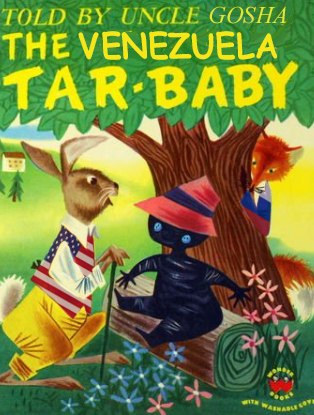
To help fill the Venezuelan treasury, deter attacks on President Nicolas Maduro, reinforce his army,  and show the world he’s the Russian who can defeat both types of war the US is waging against the world – sanctions war and regime-change war – no bill would be too expensive for Sechin to pay. And if he can do that, he will show that he’s the natural successor of President Vladimir Putin. In point of cost for Rosneft, the Venezuelan strategy is relatively cheap.   

For the Russian military, who have created the most powerful army in South America (also a match for Canada ),  with a decade of deliveries of air and ground weapons,  the Venezuelan front is a fresh tester of American warmaking at low money cost and little risk of Russian casualties.  The combination of Sechin and the Russian General Staff  to defend Venezuela is a potent weapon to demonstrate to the world that US threats are bluff.  

So, win or lose on the battleground of Venezuela,  at home Sechin is showing his Russian allies that he’s their winner in the presidential power contest ahead.

Not everyone agrees. “Yes, the presidency is a matter of Sechin’s ambition; it’s also a condition for his survival,” comments a source who has known Sechin well. “As to who his allies are, I am not able to tell because he has managed to come into conflict with everyone around Putin. But if Sechin becomes the Kremlin’s lead on Venezuela, then Sechin will lose his battle for the Kremlin.” (more…)

- Print This Post Print This Post

By John Helmer, Moscow

In February 1989 I started the Moscow Bureau with a first despatch to Ta Nea, then Greece’s leading daily newspaper. That was thirty years ago, a generation in time and several generations in Russian politics.

A generation is the time it takes for individuals to grow into adulthood acquiring the shared understandings which come as their life cycles run together. Knowing more than the generation around you understands can make you into a celebrity or a pariah; reward you with power, medals and money or turn you into a pauper. Knowing too much about Russia has been a life-or-death story for me. How to survive to tell the story, so that you can anticipate the future we hope to share – this is what Chris Cook, host of Gorilla Radio in Vancouver, asks in today’s broadcast. (more…)