

By John Helmer, Moscow
@bears_with
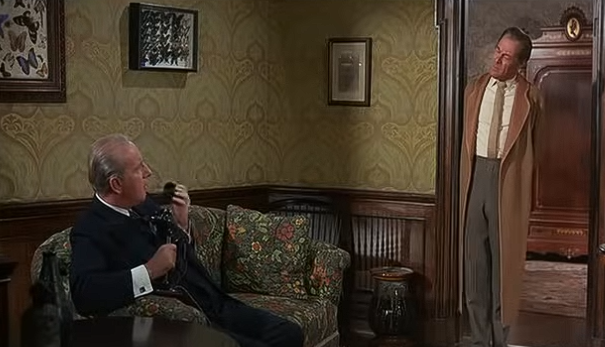
Professor Higgins’s question to Colonel Pickering about Eliza Doolittle in the line from the musical, My Fair Lady, (lead image) was: Why can’t a woman be more like a man?
In Moscow, where the course of the Iran war is having a profound impact on military, intelligence, Foreign Ministry, and Kremlin officials, almost nothing can be said in public. Not even the question they are asking each other downwards and sideways, not upwards: Why can’t a Russian be more like an Iranian?
The difficulty of answering is not because it is against the law to criticize the Russian Army’s performance in the present Special Military Operation (aka war), according to the interpretation of the local United Russia party commissar, his chief in the Kremlin, Alexei Gromov, or his chief, President Vladimir Putin.
It is not because of a lack of confidence in what Putin is deciding as commander in chief. The President reveals himself in his private conversations; their substance is not a secret for a great many in a position to know. In the telephone call with Hungarian Prime Minister Victor Orban — according to the authenticated transcript of their conversation of last October 17 – Putin said he believed Trump was not at war, not even in a special military operation, in the Middle East – not in Gaza and Lebanon from 2023, not in Iran in June 2025. Putin also made clear then that he doesn’t think Trump is at war with Russia, and that on the Ukrainian battlefield, Trump’s “tank” is fully functional, moving “forward”, not backward.
“Donald,” Putin told Orban, “has a surprising ability to deal with various crises, such as the regulation of the Middle East and, most recently, the Gaza region, and I hope that there will also be a satisfactory solution to the Ukrainian-Russian conflict.”
Orban replied: “To be honest, I was also very surprised. I’ve known Donald for a long time, he’s not an ordinary person [both laugh]. His working method leaves no questions unresolved, I watch with admiration how successful he is. His business style, which is like a tornado, brings results.”
“Putin: As they say, he is moving forward like a tank. It worked for him, and we can only be happy about that. Prior to the meeting in Anchorage, the US side formulated the general principles of possible regulation, and I believe that these will be discussed again in the discussions. We have already talked about this in Anchorage, and there will probably be something to discuss in Budapest as well.”
Putin may have been using Orban to ingratiate himself with Trump in the preliminaries for the Budapest summit meeting, but it didn’t help and the summit failed to materialize. The reasons, Russian reasons first, American second, can be followed here and here and here.
What the newly disclosed transcript shows – just as other transcripts of Putin’s private conversations with US leaders reveal – is that Putin is not aiming to fight or deter Trump; that Russia is not at war with the US (and its allies); and that Putin believes that money can be paid in sufficiently large amounts (billions of dollars more for Trump than for his White House predecessors), so that Russia’s national interests will be served. That conviction is one of the three“understandings” — Putin insists as do his subordinates — which were reached at the Anchorage summit meeting with Trump on August 8, 2025.
Putin’s Anchorage reference to Orban is to the “Anchorage Understandings”.
The second of these was Putin’s belief that Trump will concede Russia’s dominance of the Ukraine in exchange for Trump’s dominance of the Americas – from Greenland through Canada to Mexico, Cuba, Panama, Venezuela, Brazil, Argentina and Chile. Exactly what (whether) Trump conceded Russian dominance of the entire NATO eastern front from Poland, the Baltic Sea, to Finland was left unclear at the time. Exactly what (whether) Putin conceded US dominance of China, North Korea, and Iran with Greater Israel was also left unclear.
The third of the “understandings” was that bribes agreed by the two presidents’ bagmen will be honoured by the presidents on receipt.
Who in Moscow shall count the sums in exchange and the interests served? That’s the Russian oligarchs.
The President’s confidant, negotiator with Trump, spokesman for the Anchorage understandings, signatory of the bribe payments, and chief representative for the Russian oligarchs – this is Kirill Dmitriev. He writes and publishes tweets several times each day because he wants to be heard. It is therefore his determined silence on every aspect of Trump’s attempted genocide against Iran, and his near-completed one against the Arabs of Palestine and Lebanon, which speaks loudest.
The Iranians do not misinterpret that silence. Nor the Chinese nor the Cubans.
To understand what the Russians who count understand at present of Russian conduct of operations on the Ukrainian battlefield, the Iranian battlefield, and the Cuban battlefield, it is necessary to read between the lines of what is said in public by the officials, including Putin; and to ask questions in private of those in a position to know enough to piece the answer to the big question. Right now that’s the Doolittle Question.
From time to time, Vzglyad, the Kremlin-backed security analysis platform, publishes operational and strategic assessments of the Ukraine battlefield. In the latest report by former GRU officer Yevgeny Krutikov, he acknowledges that a Ukrainian counter-offensive in the Vostok (Eastern) army group sector – the Zaporozhye region – was partially effective in new tactics for slowing down the Russian lines of advance. “The winter offensive potential of the armed forces of Ukraine was enough for two to three weeks. The effect of the actions near Gulyai-Pole turned out to be negligible for the Ukrainian armed forces, except that part of the open steppe which passed into the ‘gray zone’. However, since the beginning of spring, the intensity of clashes in the Zaporozhye and Dniepropetrovsk directions has not decreased, as it usually does, but rather has increased. The enemy continues to use the strategy of concentrating forces on certain sections of the line of contact in order to slow down the advance of the Russian armed forces.”
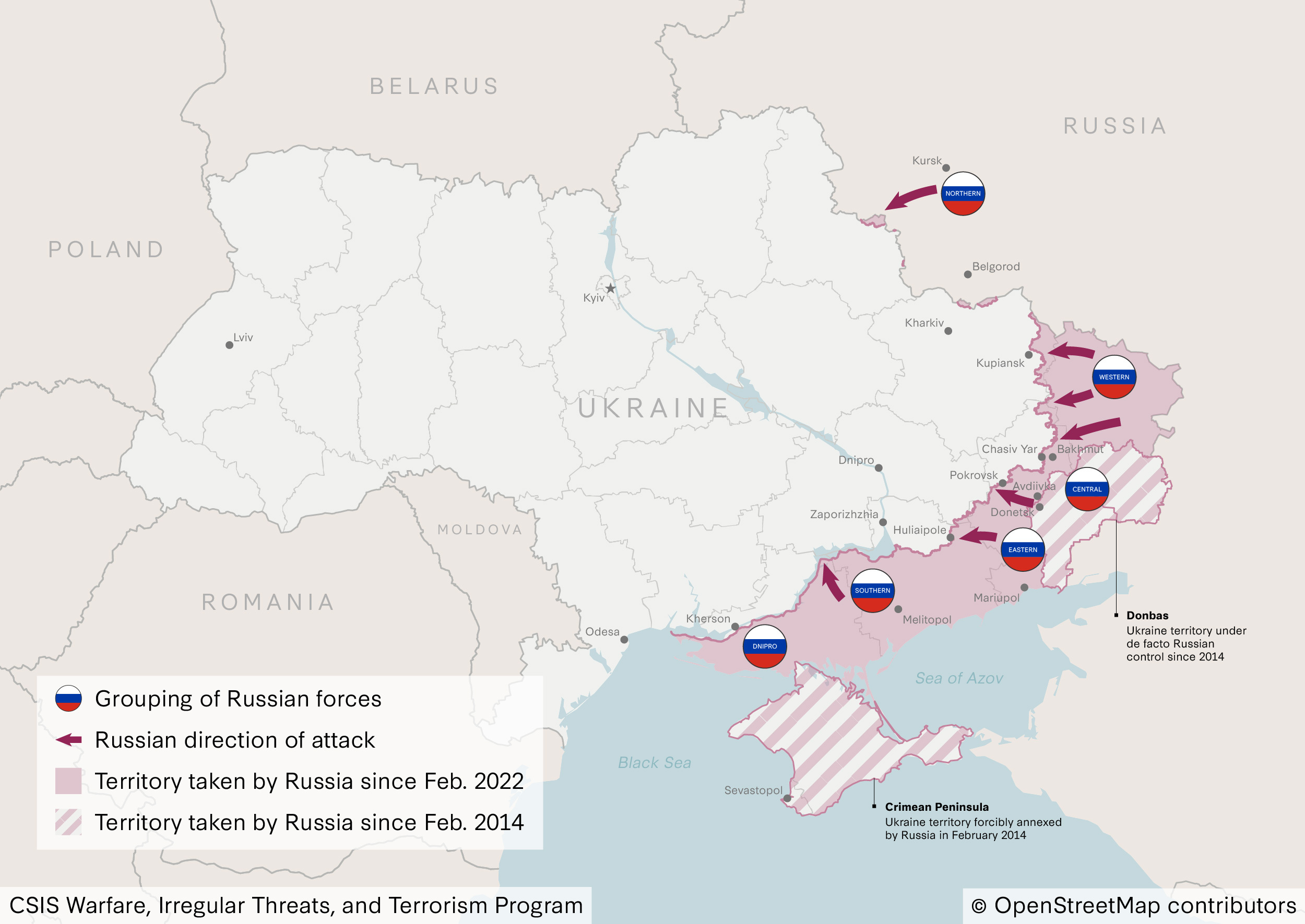
APPROXIMATION MAP OF THE MAIN RUSSIAN ARMY GROUPS ON THE UKRAINE BATTLEFIELD
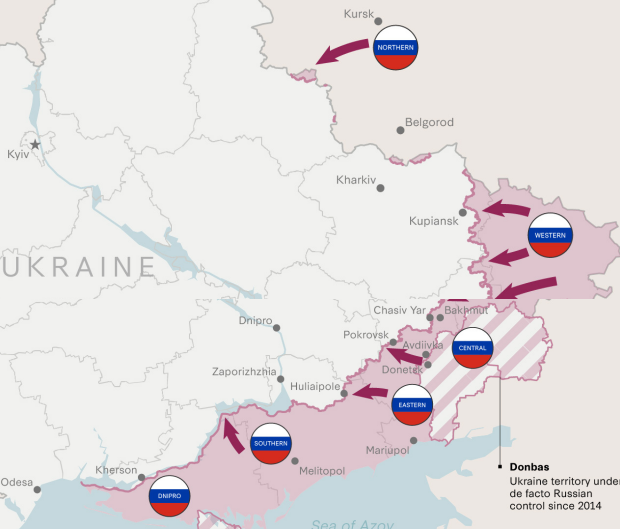
Anti-Russian source, with Ukrainian placenames, front lines and territorial control zones: https://csis-website-prod.s3.amazonaws.com/s3fs-public/2026-01/260127_Jones_Figure_1.jpg?VersionId=LE37FpKSy5P24c7MZ.kKYvqM2tLgChkZ
Krutikov concluded that “Russian troops are now…planning more active offensive actions for the summer campaign. In addition, the process of accumulating reserves and moving to more profitable first-line configurations is underway…It is estimated that the Russian armed forces may be ready to resume large-scale offensive operations in the Zaporozhye area by the summer. At the same time, the flank of the Group still needs to be strengthened, since the enemy may try to increase its raiding group tactics again by mid-April, which will require additional forces to be diverted.”
On the front, the start of the Russian summer operations is at least three months into the future.
Independently of both Russian and Ukrainian military bloggers and their evidence, the Hungarian military analyst, Mark Takacs, has produced comparable studies of battles along the front. His latest is a three-month history of the Battle of Lyman (Zapad [Western] army group, Donetsk region) posted on March 11. The evidence indicates that the tides of battle have not been a unidirectional Russian advance westwards, and that in some areas Ukrainian defences and tactics eastward have been effective, if only temporarily. To date, Takacs explains, temporary means months.
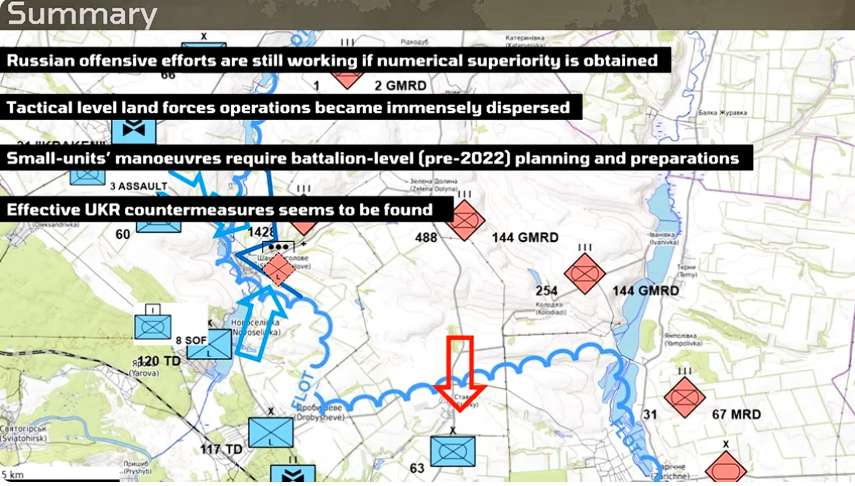
View the full analysis covering the period from September 2025 through March 2026: https://www.youtube.com/watch?v=FFP6dD5XQw0
A military source in a position to know was asked to review the daily Russian Defense Ministry bulletin of operational results from the front – combat locations, territory contested, casualties, materiel losses, grand totals. The bulletins can be followed at the official source here. To evade NATO state blocking of the link, Boris Rozhin’s Colonel Cassad military blog usually reports the bulletin details every afternoon.
In the Defense Ministry bulletin of April 7, it was reported that “units of the Sever (Northern) group of forces have improved their tactical situation… Units of the Zapad (Western) group of forces have improved their position along the front line…Units of the Yug (Southern) group of forces have taken more advantageous positions and lines…Units of the Tsentr (Central) group of forces have improved their position along the front line…Units of the Vostok (Eastern) group of forces have advanced into the depth of the enemy’s defences.”
Ukrainian casualties were reported for each army group and direction; they totaled 1,270 for the day.
Reviewing this and the archive of these daily reports, the source replied: “On the face of it, I don’t believe the numbers. There are a lot of approximations in these reports, and no army of a state with the Ukraine’s population (even ones relying on press gangs and ‘man hunters’) could sustain them. I do believe, however, that there is value in seeing them as a reflection of the operational trend. But when it comes to the official and non-official reporting, I have become skeptical. By the MinOboron and milblogger accounts of casualties, materiel losses, infrastructure and economic damage done, a rational mind would beg the question ‘How does this war go on?’”
“Four years into this war which, considering the force comparisons, should have been settled in the first six months, it’s clear that the Russian leadership decided from the start not to fight a war to the conclusive military end. This is not to deny the experience of the frontline soldiers and their skills at soldiering, but that is beside my point about the leadership. Winning the war for them means something totally different from what it means for the Russian soldier, and so the metrics are different.”
“The losses on the Ukrainian side we see reported are a reflection of the need to advertise winning in front of the domestic audience. In terms of reflecting the success of the larger attritional strategy, they are accurate; the Russians are winning – sort of.”
“The problem, for the reporters — also for Putin, as the domestic voter polls show — is that this victory advertising is contradicted by the facts on the ground; that’s to say, the slowness of the advance; the Ukrainian counter-attacks and constant territory swapping; the drone and missile strikes on border communities, Russian energy infrastructure, strategic bases, shipping; and the absence of any consequential political change in Kiev or in the European capitals. Russian voters aren’t stupid. Neither are the Putinites who measure victory using the Anchorage formula and Trump’s formula – rigged election wins, rich energy and weapons contracts, and the preservation of the oligarchs, their assets, lifestyles, and the examples they set. This is what is special and non-military about the Special Military Operation.”
“If the Kremlin wanted a national victory for Russia, Zelensky and his entire gang would be finished, one way or another. Life in the Ukraine, except on the most hand-to-mouth level, would be impossible. The Europeans would be dealing with mass power outages. In the Iran conflict we’ve seen, once again, what the prospect of ‘lights out’ does to political calculations in the West.”
“The fact of the matter is that all the numbers we see tell us the opposite of what the publishers want us to see. The Russian oligarchs are winning the war. And as long as a Ukrainian can fire a bullet from a trench, motorbike across a battlefield, or take to a podium screaming Slava Ukraini!, operate a drone, launch a Flamingo, conspire with the CIA, Mossad, and MI6 to murder Russians, flush a toilet, turn on a light, or make a social media post on any electronic device from anywhere in their country, that will be case.”
Another Moscow source in a position to know makes the comparison with the Iran war explicit. “There may be Iranians who are desperate for a deal but they haven’t shown it. But there are Russians whose desperation for a deal with Trump is showing through Dmitriev. What can you expect then?”
And the source’s answer to the Doolittle question — why can’t Russians fight Trump more like Iranians? “Ask Dmitriev, ask Putin.”



Leave a Reply