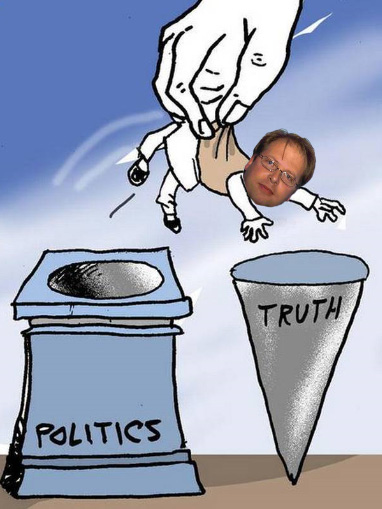
A new book has just been printed by Harvard University Press, written by a professor of French history at the University of Houston, Texas, explaining five ideas for Americans from events which took place in the court of Empress Catherine II (the Great) in St. Petersburg over five months between October 8, 1773 and March 5, 1774.
The first idea is that it is ethical for Americans to support the overthrow of the ruling regime in Russia. The second is that when it comes to international law or rules-based order in the world, the US is superior to Russia. The third is that Russia’s rulers can spend the modern equivalent of millions of dollars on buying positive PR for themselves abroad, but the message is never credible. The fourth is that the best way to improve Russian morals is to plant a colony of foreigners into the middle of the country’s administration so that “their particular character will spread and become generalized”. And the fifth idea is that Crimea isn’t really Russian because Catherine took it from the Turks by the war ending in the Treaty of Kuchuk-Kainarji, signed on July 21, 1774.
Robert Zaretsky, the author of the book and these ideas, reports the treaty signing on July 23, a mistake by two days. That’s the least of Zaretsky’s mistakes.
Igor Kolomoisky has given the New York Times the interview US intelligence agency officials wanted him to give. As they predicted, he spoke right on cue. The rest, as intelligence agency officials say the world over, is history. Only Kolomoisky and the New York Times don’t know history.
In the mind of Fiona Hill (lead image, right), the recently departed senior director for Russia at the National Security Council (NSC), everybody in Washington is vulnerable to Russian attacks of one kind or another, but not her.
Instead, she admitted in testimony to the Congressional committees investigating impeachment evidence against President Donald Trump, that she’s on an attack operation of her own. “I’m sorry to be very passionate but this is precisely…why I joined the [Trump] administration. I didn’t join it because I thought the Ukrainians had been going after the President.” She says the reason she joined up was to fight the Russians.
“I thought it was very important to step up, as an expert, as somebody who’s been working on Russia for basically my whole entire adult 1ife, given what had happened in 2016 and given the peril that I actually thought that we were in as a democracy, given what the Russians I know to have done in the course of the 2016 elections… I’m extremely concerned that this is a rabbit hole that we’ re all going to go down in between now and the 2020 election, and it will be to all of our detriment.”
Hill testified that she’s certain that “what happened in 2016” was that the Kremlin intervened to help Trump defeat Hillary Clinton. “We’re in peril as a democracy because of other people interfering here. And it doesn’t mean to say that other people haven’t also been trying to do things, but the Russians were [the ones] who attacked us in 2016, and they’re now writing the script for others to do the same. And if we don’t get our act together, they will continue to make fools of us internationally.”
“He’s [President Vladimir Putin] looking out there for every opening that he can find, basically, and somebody’s vulnerability to turn that against them. That’s exactly what a case officer does. They get a weakness, and they blackmail their assets. And Putin will target world leaders and other officials like this. He tries to target everybody.”
So, in the logic of Hill’s analysis of how the Russians operate against everybody, including herself, what evidence is there that Hill hasn’t, by concealment, calculation, corruption, or by mistake, succumbed to Putin’s attack, too? Not once was Hill asked by either the Democrats or Republicans during the deposition, nor did she volunteer her own explanation, of how she managed to inoculate herself and is now telling the truth.
If Hill is telling the truth, and equally if she isn’t, she has inflicted serious damage on her own colleagues and superiors, the US Government’s Russia-hating professionals. In her testimony Hill depicts them as lying to each other and to the press; constantly scheming for and against the President; incapable of coordination among themselves, agreement with their allies, or negotiation with their enemies. Most valuable of all to the Kremlin, Hill reveals that the American warfighter is predictable in everything he or she understands, plans or does.
To reveal this much is precious intelligence for Moscow because the Russian secret services and Putin would be less willing to believe it if it had come from home-grown agents. Either Hill is a willing dupe, or she is the fool she is warning her colleagues to beware of.
Alexei Mordashov is the largest single shareholder of Tui, the Germany-based tourism company. After the September crash of Thomas Cook, Tui is the leading tourism brand and travel company in the world. In theory Tui has gained from the misfortune of its market competitor. But in practice the gain has been offset because of Tui’s losses from the crash of the Boeing 737 MAX, which Tui had been counting on to expand its capacity to carry additional travellers to their holidays.
Tui is already the biggest operator of the 737 MAX in the UK, and the second in Europe after Norwegian Air Shuttle. Tui has ordered another 72 of the aircraft from Boeing.
The 737 MAX crashes on October 29, 2018, and March 10, 2019, killed 346 passengers and crew. The US Federal Aviation Administration (FAA) was forced to follow worldwide bans of the aircraft on March 13. This decertification, and the widespread perception that Boeing had acted corruptly and illegally in the approvals process for the new aircraft, have cut Tui’s share price from its high last November 8, 2018, by 21%. That’s a drop from a market capitalization of €9 billion then to €7 billion now.
This €2 billion subtraction means that Mordashov’s near-25% stake in Tui has lost him half a billion dollars already. He will also not be receiving any dividend: Tui’s loss in the nine months to June 30 has ballooned to €240 million. The losses to the company and to Mordashov are expected to grow when the accounts for the end of Tui’s financial year, September 30, are published shortly.
So why did Tui’s chief executive, Friedrich Joussen, summon a reporter for the Financial Times of London to announce in the headline this morning: “Tui stands by Boeing 737 Max — with safeguards”. Joussen claimed, according to the newspaper, that he and his company plan “to add 2m more airline seats next summer to cater for extra demand following the collapse of major rival Thomas Cook this year. He said that the aircraft would be the 737 Max model 8: ‘If they are approved to be safe we would fly them. It will be potentially the most checked aircraft,’ he said…. ‘We need to know what the damage is but we don’t know what the damage is until it’s flying again.’
By damage, Joussen meant losses on Tui’s balance-sheet. He didn’t mean death to passengers from a faulty aircraft Boeing has been lobbying the US Government to certify for flying again, since the ban was imposed by a hesitant FAA eight months ago. Passenger death, or Tui’s profit – that’s the tradeoff Joussen discussed with his management and board before letting fly in the Financial Times this morning.
There is another profit tradeoff which Mordashov has in mind. This is to make a public show of Tui’s backing for Boeing now in exchange for Boeing’s help to lobby the US Government to lift the sanctions on Mordashov’s engineering company, Power Machines, imposed since January 2018.
Thousands of readers have been trying to read the latest stories on this website. So many in fact that they have been fooling our defence forces into thinking they are drones – not the sort which the Houthis have been operating successfully in Saudi Arabia, or the Turks less than successfully in Libya. More the home-made contraptions which the US is paying its proxies to attack Hmeimim, the Russian airbase in northern Syria.
Defeating drone swarm warfare requires electronic jamming technology which we keep secret for obvious reasons.
You can tell our secrets are working when you encounter delays in website display and other functions. There are also filters and other devices protecting different parts of the website, text and photographs. If you are a genuine reader of investigative reporting, please be patient – blame the wait on the disgruntled targets of our recent stories.
Under threat of formal investigation for breaking the law and lying to the press, David Ridley (lead image), the English county coroner in charge of investigating the alleged Novichok poisoning death of Dawn Sturgess, has announced a new inquest hearing. This week through the coroner’s office in Salisbury, a new date was confirmed: the next court session is scheduled to take place on February 18, 2020. Sturgess died on July 8, 2018.
Asked to explain his reason for another four months of delay, Ridley refused to say that fresh evidence in the case has been found, or is expected to be uncovered by continuing police investigation. Instead, he has asked the press spokesman for the Wiltshire County Council to claim on his behalf that there is “complex legal argument in respect of which the Senior Coroner needs to give appropriate and careful consideration to before handing down a written ruling”.
The coroner’s silence signals that after fifteen months of investigation by one of the largest police, military and intelligence service operations in recent British forensic history, the allegation that there was a Russian chemical warfare attack in England last year cannot be substantiated in a court of law. (more…)
by Editor - Wednesday, November 6th, 2019 No Comments »
Not everything that glisters is gold, Shakespeare wrote as a warning about the seeming value of precious metal. Nor plisters is platinum.
The shine has been off for years now because the price of platinum has fallen steadily, and because the risks of mining it in South Africa have accelerated even faster. South Africa, with more than 90% of global reserves and supplying almost 70% of mine production of the metal, remains the market leader. But on account of the country’s political corruption, collapse of infrastructure, miner wage strikes, and falling mineable metal grades, the country has become an unstable, high-risk, high-cost source. So the stock markets for listed South African-based miners have been slashing the share price and devaluing the metal the companies have yet to dig up and sell.
Russia, which is the world’s second largest source of platinum reserves and mine production, is much more attractive by comparison: South Africa’s loss is Russia’s gain. And not just for Norilsk Nickel, the dominant Russian miner, but also for small platinum mining companies. Right now, they say they have the proven deposits; what they need is the cash to pay for the mining operations to dig it out, refine and sell it.
The problem for Russian platinum miners is that the supply of relatively low-cost alluvial – river-dredged — sources of the metal are petering out. To make up for this, junior Russian miners must raise investment to finance costly underground excavation. If they succeed, their combined output of platinum will double. It’s on speculation of this that the share price of Eurasia Mining quadrupled in London last week. (more…)
by Editor - Monday, November 4th, 2019 No Comments »
In our last episode, Denis Diderot, the French philosopher in Paris, had sold his library to the Empress Catherine in St. Petersburg. For his bonus, he had received a ticket to meet and talk to Catherine directly. At their first meeting at a masked ball in the Winter Palace, Diderot was wearing his old black suit and a borrowed wig. “Monsieur Diderot, do you see that door?” the Empress told him. “It will be open to you every day from three to five.”
President Vladimir Putin (lead image, right) has known Arkady Rotenberg (left) for much longer, and the connecting door between them has been open for much, much longer. Recently, on the account of the esteem in which the former holds the latter, it was arranged that the state monopoly on the enlightenment of Russia’s schoolchildren should be given to Rotenberg. That’s to say, the monopoly concession paid out of the state budget for the publication and distribution of school textbooks produced by a group of companies Rotenberg controls.
In our first episode, Diderot was shy towards the ruler of Russia. In our second episode, Rotenberg is also shy. He says the Caribbean company which controls the enlightenment concession has nothing to do with him. Read on, as the philosopher turns sophist. (more…)
by Editor - Tuesday, October 29th, 2019 No Comments »
It doesn’t suit any of the sides in the US presidential campaign to acknowledge that the terms President Vladimir Putin agreed this week for the Turkish invasion and occupation of northern Syria to become permanent are not those which Russia’s Defence Ministry, General Staff, Foreign Ministry and Foreign Intelligence Service proposed instead.
That’s too complex a point in the American political contest between President Donald Trump, his supporters and opponents. So complex, in fact, that Trump is gaining nothing in domestic job approval rating in the polls, as he intended his Syrian “troop withdrawal” and “save the oil” moves to achieve.
This is also too fine a point for the alternative media to concede in their competition for audience (and money) with the mainstream media. Both of them share the idea that Putin is the dominant decision-maker in Moscow. To alt-media writers and publishers, that’s a good thing; to the mainstream media that’s a bad thing, a very bad thing. The truth of the matter – the Russian political fact of the matter – is beside the point to both. American exceptionalists being what they are, rightwing imperialists and leftwing imperialists, Holocaust and climate warming deniers included, there is no room in the present American discourse for the facts on the ground. On the ground in Syria, or on the ground in Moscow.
The big fact on the ground that’s being missed in North America is that Putin has agreed to another Turkish invasion of a neighbouring country. This was not Kremlin policy at the time of the Turkish invasion of Cyprus in 1974. It wasn’t Kremlin policy last September when Putin and President Recep Tayyip Erdogan agreed on terms for the temporary protectorate of Idlib. In the run-up to the negotiations in Sochi on Tuesday (October 22), this was not the Russian policy consensus toward the Turkish invasion of northern Syria, nor toward the options for driving the Turks back where they belong.
Half-measures are what turned out. In Russian strategy and politics, the outcome could have been worse, so half-measures seem to be better than pushing Erdogan back towards the US and NATO, as Russians believe to be his genuine preference.
In American presidential politics, the outcome in Sochi could hardly, ironically, have been better. To Trump’s critics and the war party in Washington, Trump has been shown up to be out-smarted and weak in the face of Putin’s initiative. To Trump’s supporters and the anti-war party, Putin and Erdogan have made a better agreement towards ending the war in Syria than the one Vice President Mike Pence and Secretary of State Mike Pompeo signed the week before.
President Vladimir Putin and Prime Minister Benjamin Netanyahu were both born under the sign of Libra. The zodiac directs them, on the positive side, to be cooperative and diplomatic; on the negative side, to be indecisive and vacillating. For likes, Librans click most on harmony and balance.
October 21 was Netanyahu’s birthday, and for the fourth time in five years Putin (born October 7) telephoned to wish him well. More than that, as Netanyahu was struggling – failing, in fact – to assemble a parliamentary coalition with enough votes to keep him in office, Putin declared: “You are by rights highly respected by your compatriots and by people outside Israel. We in Russia know you as a firm proponent of strengthening friendly ties between our countries and respect you for making a huge personal contribution to the development of mutually beneficial cooperation in a variety of fields. I highly value our constructive and business-like relations. I hope to be able to continue our substantive dialogue and fruitful joint efforts in the interests of Russian and Israeli people, as well as regional security and stability.”
This is a very odd choice of exaggerations and misrepresentations for the Russian head of government to pass to another head of government – especially one who has just lost a national election; faces indictment for corruption; and directs a policy of warmaking against two of Russia’s battlefield allies, Syria and Iran, not to mention allowing his air force to shoot Russian airmen out of the sky to their deaths.
When Putin told the Arab media last week that his principle is “Russia will never be friends with one country against another”, he was making an exception for Israel. But why of all the Israelis who celebrate birthdays does Putin pick on Netanyahu? (more…)
by Editor - Wednesday, October 23rd, 2019 No Comments »