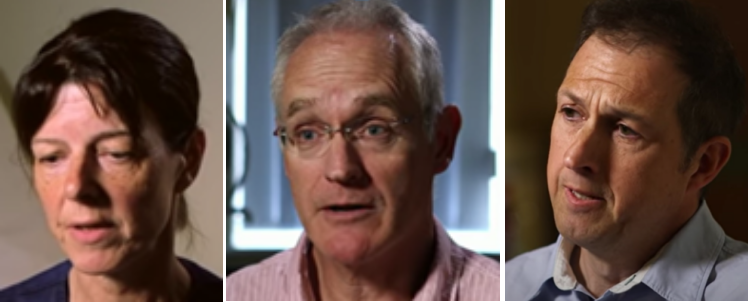
One nurse and two doctors have testified that they were in charge of the medical treatment of Sergei and Yulia Skripal when they were admitted to Salisbury District Hospital in the early evening of March 4, 2018. Sarah Clark (lead image, left) was the senior sister in charge of the shift at the Radnor Ward’s Intensive Care Unit (ICU). Duncan Murray (centre) was the doctor in charge of the unit. Stephen Jukes (right) was one of several doctors assigned to the ICU; he was the one responsible for the Skripals.
If the Skripals were to exercise their legal right to apply to the British High Court for review of the terms of their confinement in secret and in isolation – or if their Russian next of kin in Yaroslavl, or the Russian Embassy in London applied to the court on their behalf — Clark, Murray and Jukes would be summonsed to testify to what they witnessed at the hospital two years ago. What they would say under cross-examination and in fear of committing perjury would not be the same thing they have already said publicly.
Photographs of the crime scene, the Salisbury Hospital Radnor Ward, where the three medical staff say they treated the Skripals, have just been obtained. The hospital ward was a crime scene because evidence of the weapon allegedly used in the crime against the Skripals was in their bloodstreams and in the medical records kept by the nurses and doctors in the ward. The photographs illustrate one of the gaps between what was true then and what is false now.
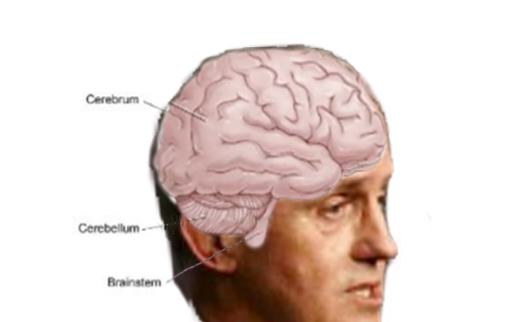
Malcolm
Turnbull is the most intelligent man ever to become Australian prime
minister, and to have left office more stupid than he began. Among
the governments south of the Equator, this is without precedent.
Since Turnbull served as head of government for only three years,
2015 to 2018, when he was 61 to 64 years of age, he has set the
medical record for non-traumatic early-onset senescence in the
cerebrum; that’s the part of the brain responsible for learning.
He didn’t; he can’t.
This week Turnbull has published a book of selections from his life aimed at refreshing his credentials to retake the political power he lost to rivals. His display of the symptoms that caused him to lose it is undiminished.
The
last people to say they saw Sergei and Yulia Skripal together were
two medical staff members at Salisbury District Hospital. The first
was Senior Sister Sarah Clark, who was in charge of the evening shift
at the Salisbury hospital’s Intensive Care Unit; the second was Dr
Stephen Davies, a consultant in the Emergency Department of the
hospital.
According
to the British Government, the two Skripals were attacked by a
chemical nerve agent in the centre of Salisbury at about 4:15 on the
afternoon of Sunday, March 4, 2018, then rushed by ambulance to the
Salisbury hospital. The nerve agent was reported later – at least
thirty-six hours later, perhaps longer – to have been identified by
the Defence Science and Technology Laboratory at Porton Down as an
organophosphate chemical warfare agent called Novichok produced in
Russia. The British Government’s version of what happened is that
the nerve agent was despatched from Moscow with assassins of the
Russian military intelligence agency GRU. Two men have been named and
publicly accused by British prosecutors with attempted murder and
other crimes.
The Skripals survived the alleged attack, and have recovered from its medical effects. Public releases by the hospital claim Yulia Skripal was released on April 9, 2018; her separation from her father was confirmed thereby. Sergei Skripal was reportedly released from hospital on May 18. In two subsequent telephone calls Yulia made to her cousin and grandmother in Russia, and in a brief televised statement filmed by the US news agency Reuters on May 23, she referred to her father’s medical recovery, but did not say he was living with her. The Reuters film was recorded in a parkland corner of the Royal Air Force base at Fairford, north of Salisbury. The base is run by United States Air Force intelligence and bomber staffs.
Yulia’s
last telephone contact with her family in Russia was on July 24,
2018. She has not been heard from since.
Sergei Skripal has been recorded in three brief telephone calls to his niece’s and mother’s home in Yaroslavl; they took place on April 4, 2019; May 9, 2019; and June 26, 2019. Only the May 9 call has been broadcast by the Russian media; it lasted for less than 30 seconds. Sergei did not mention Yulia nor did he say he was living with her. He has been incommunicado since June 26, 2019.
Describing
her role in treating the Skripals at Salisbury Hospital, Clark gave
an interview to the BBC which was broadcast on May 30, 2018.
Contacted at the Radnor Ward Intensive Care Unit this week, Clark now
refuses to confirm she had personally seen the two Skripals at the
hospital following their admission, claiming she is “not allowed to
give any information”.
Two
years ago Davies was working at the Emergency Department of Salisbury
Hospital when the Skripals were admitted. Days later he wrote a
letter to The
Times
newspaper reporting what he claimed then were the circumstances.
Davies continues his work in the Emergency Department, and was
contacted there this week. He now refuses to answer any question
about the Skripals.
The
British Government has prevented the Skripals from speaking publicly
or testifying in court to what they believed had happened to them.
Their whereabouts are secret.
When
the hospital staff witnesses are no longer sticking to their
eyewitness testimony, then everything which has followed, including
press statements from the hospital, the Metropolitan Police in
London, and two court records – one from the Court of Protection of
the High Court in London, and one from the Wiltshire and Swindon
Coroner’s Court in Salisbury – can no longer be taken as credible
evidence in the case.
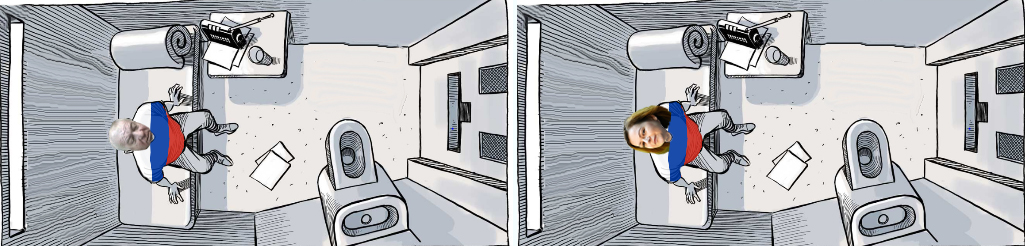
Not only have the Skripals disappeared into a form of British immuration, but they have also been separated from each other. This exceptional isolation is fresh evidence that the official narrative of the Skripal case is false, and that the Skripals are being held, not for their protection by the British from the Russians, but in punishment and solitary confinement.
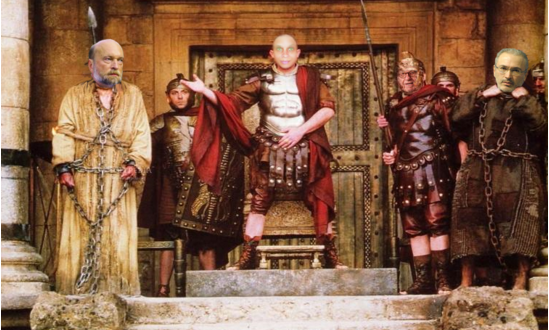
If Pontius
Pilate, Judas Iscariot and Joshua Barabbas had combined to produce the eye-witness
book on the life and death of Jesus Christ, whose anniversary falls this month,
it wasn’t heard of when it was newsworthy, in the first years of the first
century AD; readers have been deterred from looking for it ever since.
Religious faith does that sort of thing to eye-witness testimony, documents,
financial accounts, court rulings and other forms of evidence.
Likewise, Catherine Belton (lead image, centre) has produced a book with Sergei Pugachev (left), the man who stole more than two billion dollars from the Central Bank of Russia and other banks; was convicted in a British court of trying to hide it; fled to France to escape two years in prison if the English can catch him. Paying to print and market their collaboration is Harper Collins, owned by Rupert Murdoch’s (first right) media holding, News Ltd.
Together, Belton
and Pugachev have composed a gospel about the evil that is Russia under
President Vladimir Putin, and the virtue they say they believed in when Boris
Yeltsin was ruler. “We were sitting in the kitchen of Pugachev’s latest
residence, a three-storey townhouse in the well-heeled London area of Chelsea,”
Belton begins, introducing the faith the two of them share with Mikhail
Khodorkovsky (lead image, extreme right); the ghost of the hanged Boris
Berezovsky; Valentin Yumashev, Yeltsin’s son-in-law; and others identified
anonymously as the collaborators upon whom Belton relies and whom she requires
her co-religionists to accept as gospel too.
Three disciples have sworn their faith publicly so far – Luke Harding of The Guardian; Edward Lucas of The Times, and Oliver Bullough, once a reporter at the BBC. “The most remarkable account so far,” says Harding, “of Putin’s rise from a KGB operative to deadly agent provocateur in the hated west”. “Its only flaw,” Harding mentions, “is a heavy reliance on well-placed anonymous sources. Talking publicly about Kremlin corruption is dangerous, as the polonium fate of Alexander Litvinenko shows. Still, the lack of names can be frustrating.” Frustrating is the word that came to St. Paul’s mind when he was having directional trouble on the road between Jerusalem and Damascus. Inadmissible in a court of law, Pilate would have said. A pack of lies, according to Judas and Barabbas.
“Fact, not fiction,” declared Edward Lucas, an employee on the fiction floor of the same London office building as Harper Collins. “Catherine Belton, for years a Moscow correspondent for the Financial Times, relates it with clarity, detail, insight and bravery.” “The Putin book that we’ve been waiting for,” Bullough said messianically. You won’t be risking perdition yourself if you don’t wait.
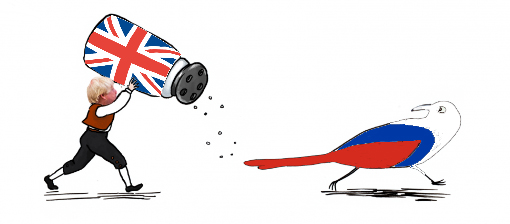
For catching
birds it’s old-fashioned child’s play to put salt on their tails. But fooling
the bird in order to get close enough with the salt-shaker, before the bird takes
off, is a job for grown-ups.
When it comes to catching fugitive bankers, money launderers and the families of corrupt state officials in Russia and the former states of the Soviet Union, the two-year history of the British National Crime Authority’s (NCA) Unexplained Wealth Orders (UWOs) is faltering because the courts require more than suspicious police and allegations promoted in the press.
Last week, the High Court ruled that NCA lawyers, prosecutors and investigators had made “unreliable” assumptions; conducted “inadequate investigation of the obvious”; applied “artificial and flawed reasoning”; were “unfair” in their evaluation of the evidence as well as pursuing targets “without any evidence”. “It is ultimately for the Court, not the NCA, to determine whether there is ‘reasonable cause to believe’,” Justice Dame Beverly Lang decided on April 8, dismissing three Unexplained Wealth Orders, together with three asset freeze orders covering several London residential properties worth about £80 million. Through a network of offshore foundations, trusts, and cut-out companies these belong to Dariga Nazarbayeva and Nurali Aliyev, daughter and grandson of Nursultan Nazarbayev, the ruler of Kazakhstan. Nazarbayeva is currently the speaker of the Kazakh Senate.
The stinging rebuke to the NCA, and a pending appeal of two earlier court judgements against Zamira Hajiyeva, the wife of a jailed Azerbaijani banker, are likely to slow down, or stop altogether, the pursuit by Prime Minister Boris Johnson (lead image, left) of Russian runaways in the UK.
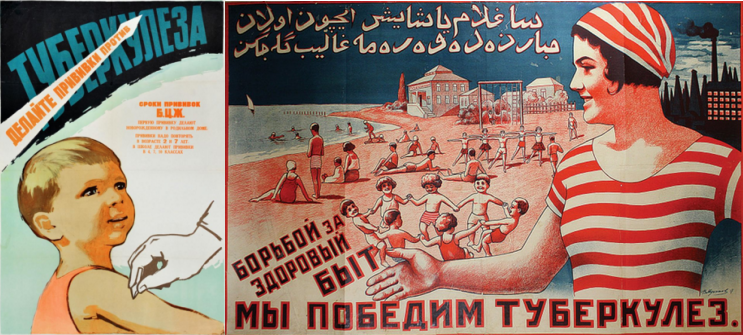
Inoculation
against tuberculosis, the official Soviet state policy for almost a century, continues
to shield the Russian population with a higher level of immunological
resistance than those in Europe and the US who lack the vaccination. This has also been a well-tested finding in
western and Indian medical publications; in India vaccination against TB is mandatory. This link between the anti-TB vaccination and
the rate and severity of Covid-19 infection is now official Russian policy.
“According to some data, those who are vaccinated with BCG [Bacillus Calmette–Guérin vaccine], the course of Covid-19 is lighter,” the Health Minister Vitaly Murashko announced earlier this month. “This is now widely discussed in international reviews. The fact is that it can have a certain meaning, it probably can,” Veronika Skvortsova followed, telling national television news. “For now I think that we won’t discuss the mechanisms of immune restructuring, but [CBG vaccination] does play a role.” Skvortsova was Murashko’s predecessor as health minister between 2012 and February of this year; she is now director of the Federal Medical-Biological Agency (FMBA).
Caution: the link is a statistical correlation. It is not a finding that is clear on the biomedical mechanism which is at work in the lungs. But because the correlation is a strong one, there’s another conclusion which the Russian medical administration has begun to emphasize. This is to rebuild the public health measures of the Soviet period which were destroyed by the virus introduced by President Boris Yeltsin and his chief of staff and privatizer of state property, Anatoly Chubais, from the virus source in Washington during the 1990s.
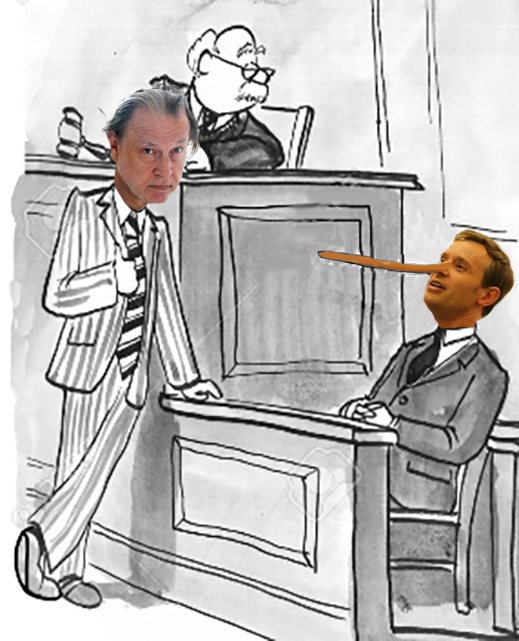
Paul Robinson (lead image, right), a professor at the University of Ottawa, has published a defence of the British Government’s indictment of the Russian Government for an attempt to assassinate Sergei Skripal with a nerve agent. “That’s the official narrative, which most people accept”, according to Robinson. He wants you to know he does too.
To the analysis of evidence of what happened, and didn’t happen, in the Salisbury town incidents of March 4, 2018, and the legal consquences which have ensued over the two years since, Robinson concludes: “I can only say ‘phooey’.” In what Robinson calls a book review of “Skripal in Prison”, he has concluded: “Helmer [lead image, left] produces not a jot of evidence…I find it odd, therefore, that he’s so keen to let the Russians off the hook for the Skripal poisoning. Perhaps the reason lies in his conspiratorial frame of mind…He’s the sort of guy who thinks that for every crime the GRU have committed, MI6 and the CIA have committed two. It’s not my frame of mind at all. But then perhaps I’m part of the conspiracy too!”
Robinson teaches politics. In his past, he was educated at Oxford University and between 1989 and 1994 he was a Russia analyst in the British Army Intelligence Corps, before serving as a reservist in the Canadian military with the same function. In the secret services and in universities, Robinson has never been subject to the British legal standards of evidence or proof of crime beyond reasonable doubt. That is, until he launched this attack in defence of his old British Army oath, and then ran into a cross-examination on a different oath – the courtroom one to tell the truth. You be the jury.
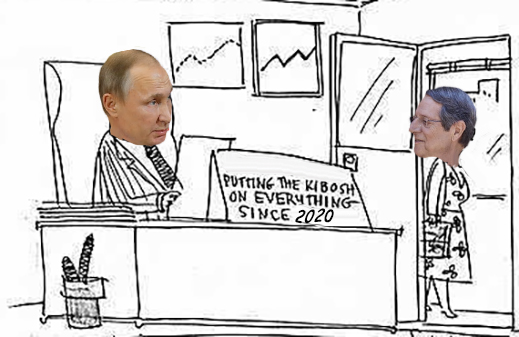
It is now a fortnight since President Vladimir Putin (lead image, left) announced a tax on Russians exporting their cash and capital to tax avoidance havens abroad; and since Prime Minister Mikhail Mishustin followed to explain that Cyprus is the target. “We have started implementing the instructions on taxing dividends from foreign accounts with Cyprus”, Mishustin said at a Kremlin meeting with Putin on April 1. “The Cypriot government has been notified of the changes in the agreement on avoiding dual taxation.”
“For Putin to make his remark in a national
address,” comments a Moscow finance source, “and then for Mishustin to confirm that
Cyprus was intended in the President’s speech shows this is now a high priority
move. It reveals how upset the Kremlin –
especially Andrei Belousov [first deputy prime minister] — has been with the role
Cyprus plays in the outflow of Russian capital. I do not see any government
allowing capital flight now during a deep and lasting recession.”
“This sounds a death
knell for Cyprus accountants and law firms,” says a Limassol investor. “This is
their biggest business. From now on only the most hardened criminals or escapees
from Russia will be here.”
There has been a flurry of press leaks from Cyprus Government officials claiming that the Russian move is not targeting Cyprus. But no official at the Foreign and Finance Ministries in Moscow, nor at the Russian Embassy in Nicosia, has said this on the record. According to Mishustin and Finance Minister Anton Siluanov, the new rules are still being decided, and will be announced on April 24.
By the way, the kibosh was an iron bar used two hundred years ago by cobblers in the north of England to flatten leather as they were making clogs. When the word reached the streets of London, it meant flatten in more ways than that one. The government of President Nicos Anastasiades (lead image, right) and Nicos Christodoulides, his foreign minister and aspiring successor, having chosen last year to cut their ties to Russia in exchange for American promises to protect the island from the Turks, is the clog in this story.
Late last week the 193 member states of the United Nations General Assembly (UNGA) agreed unanimously on a statement of “solidarity of countries in the fight against the pandemic”. They also agreed unanimously there is “no place for any form of discrimination, racism and xenophobia in the response to the pandemic.”
On the explicit opposition of Ukraine, Georgia, the US, the UK, and the European Union, the UN did not agree on “the rejection of trade wars and the use of unilateral sanctions adopted in circumvention of the UN Security Council to ensure urgent access to food and medicine, as well as countering financial speculation with essential goods.” This was the language of a resolution drafted by Russia.
Thus has the world decided that warfare is an essential service and should continue without lockdown, quarantine, social distancing, hand-washing, or restriction of any kind.
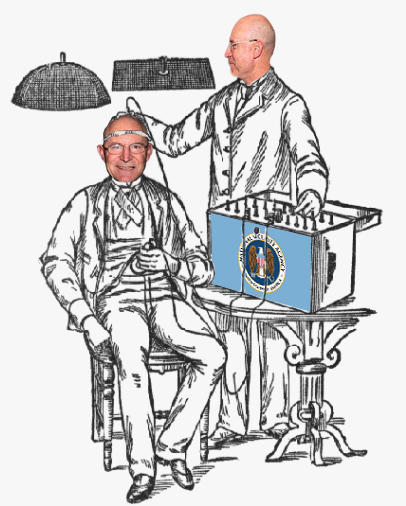
Now for a
psycho-shocker of a spy story in which the National Security Agency’s (NSA)
chief of the Research Directorate goes head to head with Russians whom his research
proves tried “to change the outcome of our presidential election”, and then tried
to kill Sergei Skripal to “serve[d] as a warning to Russia’s adversaries”.
The psycho-shock
has already happened to the NSA chief and storyteller, Eric Haseltine (lead
images), so he is paralysed by a Russian
weapon that’s about to psycho-shock the reader. That’s you.
After you read this, you will never again be able to type on a keyboard without anticipating that the “diabolically clever” Russians are reading every word. But maybe you are suspicious the Central Intelligence Agency (CIA) might be doing the same thing? “Naw”, says Michael Arneson, Haseltine’s hero and NSA engineer from a dirt poor Minnesota family with no more than a high school diploma, and whose favourite drink is Mr Pibb. “The CIA is way too incompetent to create something this good.” In this tale, American heroes fit to fight the Russians and save you from your keyboards, talk like that.