-  Print This Post
By John Helmer, Moscow
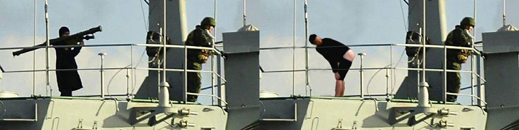
It isn’t exactly certain what the Turkish military saw on a foredeck deck of the Russian Navy’s landing ship, Caesar Kunikov, as it passed through the Bosphorus Strait last Sunday. What is certain is that the Turkish Foreign Ministry declared the Russians had launched “a pure provocation” at Turkey, and that the Turks would react with matching force. “The necessary answer will be given in situations deemed to be a threat,” announced Mevlüt Çavuşoğlu, who has been foreign minister for 12 days.
Hurriyet, a Turkish newspaper, identified the source of its photograph as the Twitter account of “photographer Emre Dağdeviren”. The photograph has disappeared from that source, if it ever was there.
The London media also went on the attack. The Guardian published a photograph, but the caption, “Photograph: None”, failed to identify the source or the authenticity. The Financial Times reported its Istanbul correspondent as saying it was “a particularly chilling incident.” With more caution, Reuters claimed that the Turkish television channel NTV “broadcast photographs that it said showed a serviceman brandishing a rocket launcher on the deck”. Reuters wasn’t sure what had happened, or whether the photographs had been fabricated; but the Reuters headline declared “Turkey [was] angered by by rocket-brandishing on Russian naval ship passing Istanbul.”
(more…)
by Editor - Thursday, December 10th, 2015
No Comments »
- Print This Post

By John Helmer, Moscow
If the London art market is a test of reality, then last week’s Russian Week sales demonstrate that Russian buyers are poorer, and there is now less Russian money for buying Russian paintings, jewellery, porcelain and other art objects than at any time since Russian Week started in London in 2005.
Some dealers say there is another test of reality, and that’s the quality of the art, not the supply of cash bidding for it. According to James Butterwick, “Russian art has always been over-valued. People are now putting reasonable estimates on their items with the result that more will sell.”
Last week’s sale results from the four auction houses – Sotheby’s, Christie’s, MacDougall’s and Bonham’s – totalled £17.2 million. Simon Hewitt, international editor of Russian Art + Culture, reports this is “less than half the £40.7m generated by the corresponding Russian Week in late 2014, and down 18% on the £21.2m taken at Russian Week in June 2015 (even though all four firms staged slightly larger sales this time out, with the total number of lots on offer up 20% from 888 to 1069).” Hewitt explains the reason is “a host of calamitous factors — the weak ruble, increasingly isolated Russian economy, terrorism, Syria.”
(more…)
by Editor - Sunday, December 6th, 2015
No Comments »
- Print This Post
By Gary K. Busch, London
The most frustrating aspects of the media coverage of the current efforts to suppress the forces of Daesh (ISIS) in Iraq and Syria is that there is a dearth of ‘joined-up’ thinking behind most of the analyses. There is a lot of eyewitness reporting of daily events in the countries, cities bombed, planes downed, tactical struggles for control of cities and provinces, secret alliances and nefarious activities , as well as a litany of opportunism by politicians pressing self-serving analyses of the events. The most important problem, however, is that each aspect of the evaluation of the impact of the Syrian crisis is treated as a discrete problem, unrelated in any meaningful sense to the bigger picture.
There is probably no better example than the world’s reaction to events in Turkey and the search for a solution to the current crisis over Syria and its attendant problems. Turkey is the key to the Syrian crisis and its unique geographic, political, ethnic and military situations are the most important antecedent problems facing the world when trying to adopt a useful and credible policy for dealing with Syria.
Turkey has played, and continues to play, a duplicitous role in relation to Syria, and so it has found itself in conflict with enemies both international and domestic. It is bitterly opposed to the Assad regime but hates and attacks the Kurds even more, despite the fact that the Kurds have been doing much of the heavy lifting in the battles against Daesh. Turkey has supported Daesh in Syria; funded and supplied Al-Nusrah; attacked and bombed the Kurds to the south and east of the frontier; made a market in Syrian oil; refused (until recently) for the U.S. to use the Incirlik Air base; attacked and downed a Russian plane passing through Turkish air space for 17 seconds. Turkey’s National Intelligence Organization (Millî İstihbarat Teşkilatı,MIT) has been the main supplier of explosives, ammunition, medicine, and free passage to Daesh fighters inside and alongside Turkey.
(more…)
by Editor - Thursday, December 3rd, 2015
No Comments »
- Print This Post

By John Helmer, Moscow
The International Monetary Fund has decided to delay fresh loan payments of $3.4 billion to Ukraine. In the meantime the World Bank has given the Deposit Guarantee Fund in Kiev $500 million to keep the leading Ukrainian banks solvent. The two international agencies have also agreed to the seizure of $174 million in funds held in a Kiev bank by the London-listed iron-ore miner, Ferrexpo. The state raid on Ferrexpo’s corporate account in Finance & Credit Bank, one of the top-10 Ukrainian banks in asset value, is the first cash confiscation from a Ukrainian oligarch for the benefit of the Ukrainian reform programme.
According to sources close to Konstantin Zhevago, control shareholder and chief executive of Ferrexpo, and owner of Finance & Credit Bank, the money is being used to prop up the banks of rival oligarchs, Igor Kolomoisky and Gennady Bogolyubov, owners of Privat Bank; Vasily Khmelnitsky’s Khreschatyk Bank ; and Bank Dnepr Credit belonging to Victor Pinchuk.
(more…)
by Editor - Wednesday, December 2nd, 2015
No Comments »
- Print This Post

By John Helmer, Moscow
The soybean is an edible legume native to East Asia. For Russians
that means it’s a native of Siberia. Eighteen months ago, President Vladimir Putin declared Russian soybeans to be the best in the world.
The president was on a tour of the Russian Far East, the region of the country where most Russian soybeans are grown. He promised to increase federal budget support to accelerate the rate of growth of the soybean harvest until Russia can become self-sufficient in soybeans, and do without imports from the world’s two largest sources, the US and Brazil. The Russian harvest has been breaking records, but for the time being, it is far short of the domestic requirement. Can the annual import volume of two million tonnes – roughly one-half of consumer demand, and equal to the domestic harvest – be grown at home, and how quickly?
(more…)
by Editor - Tuesday, December 1st, 2015
No Comments »
- Print This Post

By John Helmer, Moscow
Never before has the personal animosity of the heads of state of the United States and Turkey towards the President of Russia been so sharp and expressed so obviously. The consequences, too.
(more…)
by Editor - Friday, November 27th, 2015
No Comments »
- Print This Post

By John Helmer, Moscow
Andrei Melnichenko’s Eurochem group, one of Russia’s largest producers of fertilizers, has responded to a New York lawsuit this month from Alexander Mashkevich’s International Mineral Resources (IMR). Mashkevich is accusing Melnichenko of paying American agents to hack into his company computers, steal sensitive information, and promote litigation and propaganda damaging to Mashkevich and his companies’ reputations. Melnichenko says he has been vindicated.
In a press release issued in Moscow yesterday, Eurochem announced it has won “favourable decisions” from a US federal district court in Washington, DC, whose rulings followed a week after the IMR filed its accusations in the New York Supreme Court. Eurochem, its release says, “has obtained favorable judicial decisions in its legal dispute with a contractor retained for the construction of the cage shaft at the Group’s potash mining project in Russia’s Gremyachinskoe deposit. On November 17-18, 2015, the U.S. District Court for the District of Columbia issued a series of decisions rejecting all allegations that the consulting expert hired by EuroChem-VolgaKaliy had engaged in unlawful information-gathering activity.” The contractor referred to in the judgement is Shaft Sinkers, an associated company of IMR under Mashkevich’s control.
The opening of the Washington court files, which had remained sealed or unreported for more than a year, also exposes a world of Washington lobbying and propaganda targeted at the Kazakhstan Government and President Nursultan Nazarbayev.
(more…)
by Editor - Thursday, November 26th, 2015
No Comments »
- Print This Post
By John Helmer, Moscow
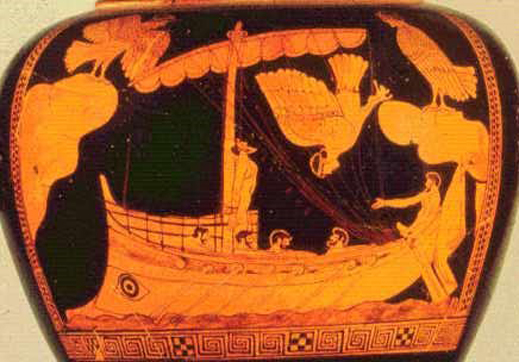
A generation ago, a Greek prime minister, whom the Soviet Politburo in Moscow underestimated, defeated a Turkish attack on Greek territory. That was Prime Minister Andreas Papandreou; the victory was the battle of the Aegean of March 26, 1987. Before that, no Russian had defeated a Turkish attack for more than a hundred years. Since 1991 Russians say Turkey has been “not merely a close neighbour, but a friendly state.”
(more…)
by Editor - Tuesday, November 24th, 2015
No Comments »
- Print This Post
By John Helmer, Moscow
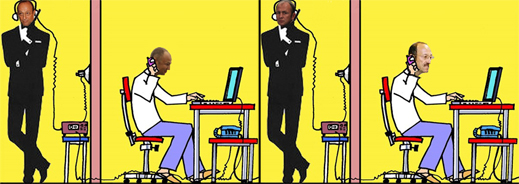
Proof that oligarchs have more money than sense isn’t hard to come by. For a man with no business reputation left to lose in London to ask a jury in New York to judge his business rival to be a scoundrel is a proof that Alexander Mashkevich (lead image, with glasses), control shareholder of International Mineral Resources, is determined to test against Andrei Melnichenko (lead image, without glasses), owner of the Eurochem fertilizer group.
International Mineral Resources (IMR), a Dutch company owned by Mashkevich and his two partners, Patokh Chodiev and Alijan Ibragimov, has been an offshoot of Eurasian Natural Resources Corporation (ENRC). When ENRC was at the peak of its London Stock Exchange value, Mashkevich was worth over $3 billion. He’s down to less than $2 billion now, according to Forbes which doesn’t count liabilities. Melnichenko, whose debts are also not counted by Forbes, is reported to be worth over $8 billion. By the arithmetical rule, having four times more money than Mashkevich, Melnichenko should have one-quarter the common sense. Or is it the other way round?
(more…)
by Editor - Tuesday, November 24th, 2015
No Comments »
- Print This Post

By John Helmer, Moscow
Otkritie Bank has received Rb157 billion from the Central Bank of Russia (CBR) and the Deposit Insurance Agency (DIA) to rescue Trust Bank from bankruptcy. It is the second largest bailout in Russian bank history for what may be the longest lasting and most expensive bank fraud by its shareholders. But thus far the CBR, DIA and Otkritie have pursued in Moscow only a fraction of the money that has been lost, while the money trail leads to Cyprus, and to offshore entities operated from Cyprus. “Inexplicably”, observes an international bank regulator specializing in money laundering by Russian banks, “they won’t do the obvious — pursue the perpetrators of the Trust Bank fraud offshore where all the money went.”
(more…)
by Editor - Monday, November 23rd, 2015
No Comments »