By John Helmer, Moscow
The Khotin family are either the cleverest new men on Russia’s billionaires’ row, strutting out with prime commercial real estate and oilfield assets, which will double or triple in value as soon as the war is over and the Russian market for corporate bonds and share listings revives. Or else the Khotins are walking corpses, whose income has plummeted below the level required to meet the interest instalments on their debts; their oilfields cost more to pump than the oil can be sold for, and their bank is going broke on defaulted loans from related parties – that’s themselves. The advantage of being, as one Moscow newspaper calls them, the “most secretive of Russian businessmen”, is that noone is certain whether the Khotins are alive or dead. In the current war, they may have been, or they are about to become, the costliest of casualties.
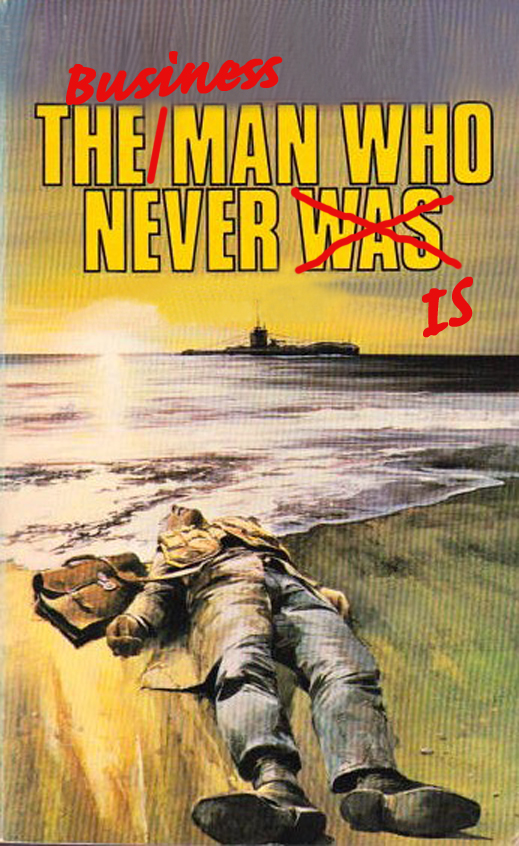
In the history of the last war the British have excelled in portraying themselves as secretly cleverer than their allies, the Russians and Americans, as well as their enemies, the Germans. In the archive of grand British intelligence deceptions, none was a more effectively kept secret — so the British claim — than Operation Mincemeat. That’s the one where the corpse of a London suicide was dropped by British submarine on to a Spanish beach, dressed in an officer’s uniform and carrying top-secret plans (lead image from the movie). The objective was to fool the Germans into opposing the 1943 allied Mediterranean invasion in Greece when the landings were really intended for Sicily. The way the British tell the story, the corpse was very persuasive.
In their business career so far, the Khotins are like that. Unrepayable debts, loaned by state banks on the personal say-so of high state officials, secured by future revenues enhanced by administrative favours, would be one reason for making the Khotins’ papers look exceptionally valuable, while keeping their existence secret. There’s another reason. No photograph of either Yury or Alexei Khotin is known to exist. The national photo archives of Tass, RIA-Novosti, Kommersant, Interfax, and Moskovsky Komsomolets all say they have no picture of them.
(more…)