- Print This Post Print This Post

1878

By John Helmer, Moscow

The Hillary Clinton effect – war with Russia on all fronts – destroyed billions of dollars in the equity value and market capitalization of Russian corporations. The collapse in the international price of crude oil, to which the Russian stock market index is usually tied, accelerated the decline.

But starting a year ago, a novel Russian effect appeared in the market. The trend lines – yellow for the Moscow MICEX index, blue for oil — began to diverge. Russian stock prices started climbing, crossing the downward movement of the oil price (lead image, top right, 1-year chart) and continuing upwards even when oil’s gains were reversed.

That is what professional investors and brokers call the Russia re-rating effect. And it commenced long before Donald Trump was elected US President on November 8 (lead image, lower right, 1-month chart).  Trump’s victory  turns out to have been a one-day wonder, a blip on the chart of the Russian stock market revival. So, if Trump is ready to put a stop to the US war on Russia  – or even if he isn’t —  is there a Russian boom coming?  Yevgeny Gavrilin (lead image) says there is; on the internet he’s calling it Boomstarter.ru. (more…)

- Print This Post Print This Post

%d1%81%d0%bd%d0%b8%d0%bc%d0%be%d0%ba

By John Helmer, Moscow

The geography of US election votes this week has never been seen before.  Also, it has produced the biggest defeat ever inflicted on modern literacy – this is the capacity of Americans to understand the truth value of what they read and are told by television, radio, the social media, and the internet.  (more…)

- Print This Post Print This Post

1874

New broadcast by Chris Cook with John Helmer, Victoria, B.C., Canada

Click to listen  

Gorilla Radio is broadcast weekly by Chris Cook on CFUV 101.9 FM from the University of Victoria, British Columbia. The radio station can be heard here.  The Gorilla Radio transcripts are also published by the Pacific Free Press. For Chris Cook’s broadcast archive, click to open.

For Clinton’s speech conceding her election defeat by men and little boys, but promising victory to women and little girls%d1%81%d0%bd%d0%b8%d0%bc%d0%be%d0%ba3, watch this.

If you are a little girl , and you aim to grow up and grab the ring too, try Chelsea Clinton’s (right).  There are unconfirmed reports that this ring was specially commissioned  and cost about $1 million. There is no telling where the stone and the money came from.

Let’s see if Federal Bureau of Investigation Director James Comey has suspicions which President-elect Donald Trump has already decided  not to put in front of a grand jury. If this sounds like the terms of the succession deal of December 31, 1999, between President Boris Yelstin and his successor,  Vladimir Putin – the Family keeps its fortune, the new man takes power —  it is.

- Print This Post Print This Post

18732

By John Helmer, Moscow

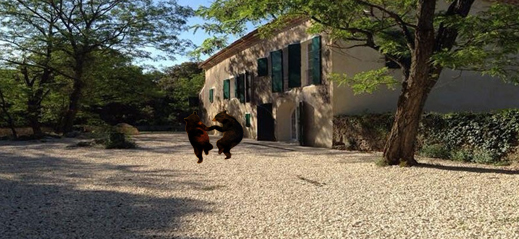
Swiss neutrality has as many holes in it as Swiss cheese. No holes in the Bear’s neutrality. From the beginning to the end,   this website has not mentioned the words Donald Trump, not even once. (more…)

- Print This Post Print This Post

1872

By John Helmer. Moscow

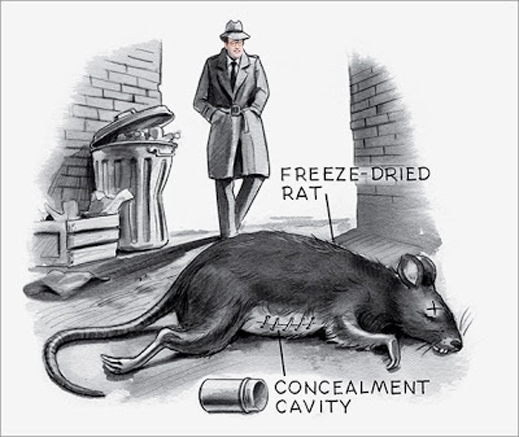
Confidential subscribers to Dances with Bears have been provided with directions and codes required to find, then open, the dead drops for leaving and collecting the sensitive information on which this website’s investigations depend. This month the dead drop is a rat.  Inside the rat there is a moisture-proof container for miniaturized rolls of film, tape-recordings, official documents, and secret messages.

This week the rat has disgorged two film negatives. The first reveals the face of Benedict Worsley, the man behind Russia’s biggest bank robbery who, until now, has kept his face out of the public media and off the internet. The second is Robert Owen-Jones, an Australian government espionage agent.   Next week he will take over as the Russia-hating chairman of the global diamond trade regulator known as the Kimberley Process. (more…)

- Print This Post Print This Post

18672

By John Helmer, Moscow

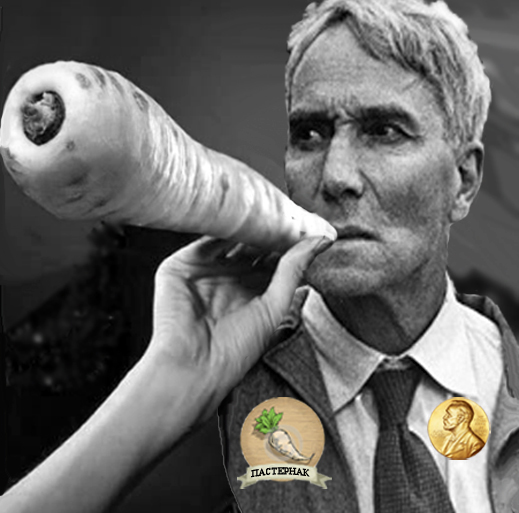
 If you were the only person in the world who thought yourself a genius, it would be an embarrassment to be named Barry Parsnip.

Robert Zimmerman solved the nomenclature problem. He became Bob Dylan – and Hey Presto! He won the Nobel Prize for Literature for 2016.

Barry Parsnip (aka Boris Pasternak) didn’t solve the problem. But it was solved for him by a combination of the British, US and Soviet secret services, with an assist from the Dutch and Italians.  He won the Nobel Prize for Literature for 1958 before his novel, Doctor Zhivago, had been read in the original Russian by more than a thousand people, counting government officials. Following the prize-giving until now, about 10 million people have read it, mostly in translation. But time and numbers haven’t improved either on Parsnip or on Zhivago. It is still, as Vladimir Nabokov said at the start, “a sorry thing, clumsy, trite, and melodramatic, with stock situations, voluptuous lawyers, unbelievable girls, romantic robbers, and trite coincidences.”  Kornei  Chukovsky, Pasternak’s neighbour and comrade, thought the novel was “boring, banal.”  Yevgeny Yevtushenko said it was “disappointing”. Anna Akhmatova told Pasternak to his face that Zhivago was a bad novel “except for the landscapes.” She was being ironic – there are no landscapes in the book.

Not to Pasternak’s face, Nabokov went for Pasternak’s jugular – his vanity. Nabokov called Pasternak’s composition “goistrous and goggle-eyed.”  That turned out to be the perfect picture of a victim, and MI6 and the CIA were able to provoke the Soviet authorities into persecution  of Pasternak the victim. That operation, codenamed AEDINOSAUR,  confirmed  what the West wanted the world to believe – that Russians are bad by a standard noone else in the world is held to.

Pasternak’s story, when it happened and still today,  is also confirmation of the readiness of some Russians to believe that however crapulous and despised they are at home, there will always be love for them across the frontier, in the West.   (more…)

- Print This Post Print This Post

1871

By John Helmer, Moscow

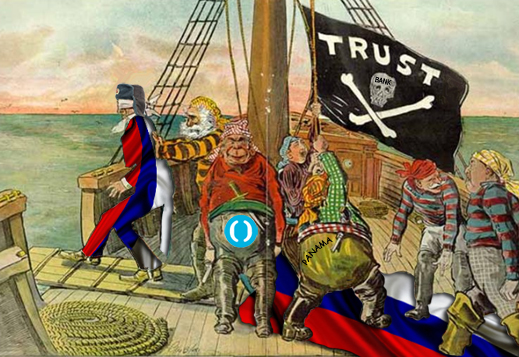
In hot pursuit of the $3 billion fortune embezzled from Trust Bank of Moscow, English lawyers, Russian bankers, Swiss policemen, and Cypriot accountants need rest and recreation. Where better to study the evidence than in the south of France, where Benedict Worsley, son of a famous Old Bailey criminal lawyer, has refurbished an old farmhouse into luxury vacation villa. And for a weekly rental of £7,101, it’s a steal. (more…)

- Print This Post Print This Post

18701

By John Helmer, Moscow

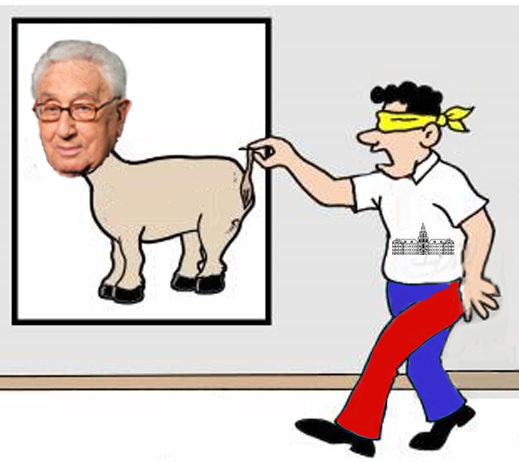
Henry Kissinger has been elected a foreign member of the Russian Academy of Sciences, according to an announcement last Friday. He is the first American member of the Academy’s Department of Global Problems and International Relations. He is also the first Russian academician to have been charged with war crimes and crimes against humanity in Vietnam, Cambodia, Laos, East Timor, Chile, Bangladesh and Cyprus.  The Academy voted for Kissinger, according to the Academy spokesman Irina Orestova, for “his political and diplomatic scientific works and lectures.”

Alexander Dynkin, the head of the the Academy’s Department of Global Problems and International Relations, said today that he had nominated Kissinger himself. He dismissed Kissinger’s political record, claiming that wasn’t considered in his election. According to Dynkin, there was a majority of  11 votes in support of Kissinger at his Department.  The Academy’s press office said  Kissinger’s nomination had been accepted by a majority of the Academy’s 1,125 voting members. Another academy source said that once Dynkin had won the vote for Kissinger at his Department, the Academy vote was a rubber-stamp exercise. No opposition to Kissinger has surfaced publicly among the Academy’s Russian members. (more…)

- Print This Post Print This Post

1869

By John Helmer, Moscow

Investigators searching for $3 billion in funds missing from Trust Bank of Moscow, the biggest Russian bank fraud in history, have found Benedict Worsley, the Cyprus-based manager of the bank’s offshore operations, at a heavily fortified house in the south of France, where he is guarded by British gunmen formerly employed by the British secret services.

The High Court in London has revealed that in return for cash and a promise of immunity from prosecution, Worsley has agreed to cooperate in the search for the missing money. He is now reported to be employed by Otkritie Bank, which is being financed by the Central Bank of Russia, to operate the old Trust Bank. However, sources close to the Central Bank say that officials at the bank are anxious to see Otkritie start repaying the bailout loans, and  reluctant to soften the terms or extend the repayment dates as Otkritie is reported to be requesting. Suspicion is also rife in Moscow banking circles, according to one source,  that “well-known names in high places were beneficiaries of the Trust Bank loans. They don’t want to be identified or obliged to repay.”  They, according to a Cyprus source  and another in London, who knows Worsley, are “threats to Worsley, and he knows it.” (more…)

- Print This Post Print This Post

1868

By John Helmer, Moscow

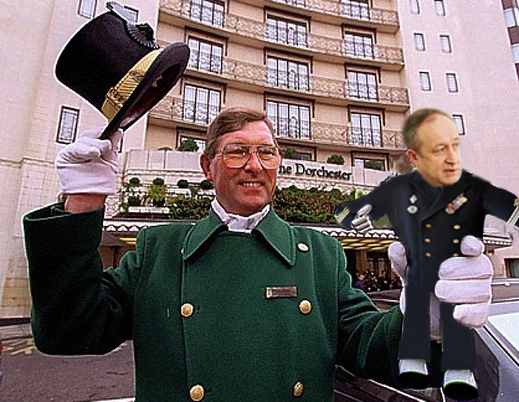
 It’s the job of the Dorchester doorman to know his hotel guests’ sins; cater to them discreetly; but  keep them under his top-hat, forever secret.

During more than a decade of Sergei Frank’s trips to London to direct High Court litigations against the men he succeeded at Sovcomflot, the Russian state shipping company, he could count on the discretion of the hotel doorman.  After the final ruling came down on Thursday, Frank, chief executive of Sovcomflot (lead image, right), can’t be sure that his humiliation by more than a dozen British judges will not now make him a laughingstock.

In a new 4-page judgement , Frank’s appeal against $72 million in compensation and costs to be paid to Sovcomflot’s ex-shipping partner, Yury Nikitin, has been dismissed, and he has been ordered to start paying immediately, with a down-payment of £1 million.

“There is no doubt,” ruled Sir Stephen Males, the presiding judge, “that, overall, the defendants [Nikitin’s companies] were the successful party. They obtained a judgment for US $59.8 million on the inquiry.” More than that, according to Males, the award of the costs of litigating should be paid to Nikitin, plus interest on further delays the shipping company takes. Not to do so, according to the judgement, “would fail to recognise the overall success which the defendants achieved.” (more…)