- Print This Post Print This Post

1888a

By John Helmer, Moscow

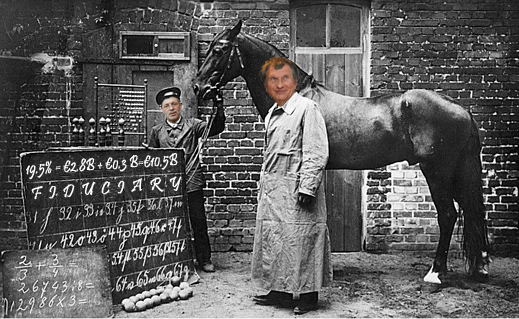
As famous hoaxers go, Igor Sechin (lead image, centre), the chief executive of Rosneft, Russia’s largest oil company, is at least as clever as Clever Hans (right), a German horse of the late 19th century.

Hans was apparently good at arithmetic. If his owner asked him to multiply three by four, he would tap his hoof twelve times. He could tell the square root of sixteen by tapping four times. He was also able to give answers to questions he hadn’t heard before. So he was a very famous horse in Germany. That was until a sceptical psychologist realized Hans would only get the answers right if his owner also knew the answers, and if the horse could see him when the questions were asked. If the owner or another questioner was invisible to the horse’s eye, Hans would fail. He even bit the psychologist after a string of tests produced wrong answers. The psychologist’s conclusion was that the horse was gifted, but not at arithmetic. Hans could detect the visual cues his questioner would give out when the horse was reaching the correct number of hoof taps, and he would stop.  The owner wasn’t attempting a fraud, and Hans was exceptionally intelligent. But his calculations were a hoax.

In last week’s Rosneft share sale — the deal President Vladimir Putin has called the biggest privatization in Russia, and also the biggest oil sector sell-off in the world this year — clever Igor, like clever Hans, has proved his indubitable intelligence. But the arithmetic which the president has announced — €10.5 billion paid into the Russian state budget – is a hoax. That’s because a curtain has been drawn across all questions of where the money has come from.

In fact, Kremlin and Russian banking sources acknowledge, the money originated from the Central Bank of Russia, recycled through the Russian state banks to Rosneft and back, and finally concealed inside secret fiduciary agreements with a consortium of Glencore, the Swiss trading company, and the Qatar Investment Authority (QIA), an Arabian Gulf state agency.  The agreements appear to make Glencore and QIA the owners of a 19.5% shareholding in Rosneft – when they are fiduciary shareholders – and that’s not the same thing as owners.

“The transaction has been financed by money creation by the Central Bank”, said a source close to the dealmakers.  “The Central Bank can’t simply print money and give it to the federal budget. So this deal was engineered for Glencore and the Qataris to appear to be buying shares when the terms of the agreement reward them for acting as fiduciaries, but ensure they cannot vote the shares without instruction from the Russian state; that’s Mr Sechin. This means the privatization of the shares isn’t genuine. Also, three-quarters of the money going into the state budget is coming from the Central Bank.”

A Russian banker in London comments: “There’s a golden rule in Russian banking. If you fiddle around, never involve foreigners because in the end they will expose you. The announced terms of the Rosneft deal cannot stand the light of day. Inevitably, the truth will come out.” According to Swiss sources, the truth has already been demanded by the US Government of the Swiss Government, which will obtain the contracts from Glencore.
(more…)

- Print This Post Print This Post

1886

By John Helmer, Moscow

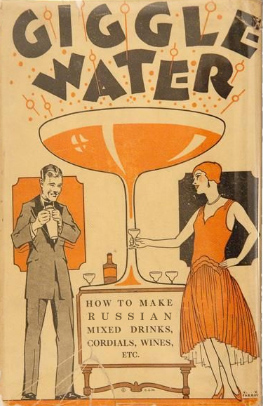
Russian champagne is like fake news in the Washington Post; and Gresham’s Law on counterfeit money.  The supply of fake champagne, including fake bubbles, is now driving the genuine stuff out of the market. A study, released in Moscow last week by the new state agency, Russian Quality System (Roskachestvo), reveals that 30% of a sampling of the sparkling wines currently being sold on the Russian market fail both Russian and international standards. That’s because they contain artificially enhanced carbon dioxide; sugar additives such as ethanol; abnormally large volumes of preservatives such as sulphur dioxide; and false labelling and packaging to cover up.

This is wine soda pop — a new beverage category created in the Russian alcohol regulations in 2012. Adding carbon dioxide artificially is not prohibited by the Russian legislation, but “it’s legalized counterfeit,” says Vadim Drobiz, head of Centre for Federal and Regional Alcohol Markets (TsIFRRA) in Moscow. And the volume is rising, as champagne imports and domestic sparkling wine consumption drop. (more…)

- Print This Post Print This Post

1885

By John Helmer, Moscow

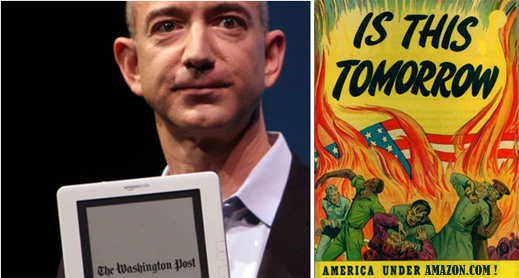
Amazon.com Incorporated makes annual sales of $107 billion, growing at a rate of 30% so far this year. The market capitalization of its shares is currently $366 billion, increasing by 14%. Imagine what would happen to both if the control shareholder and chief executive of the company, Jeffrey Bezos (lead image),  ordered Amazon.com to issue a disclaimer with every transaction that Amazon does not vouch for the delivery of goods to their buyers, nor that its goods will work according to Amazon’s advertising.

That no-vouch, no-truth disclaimer was published overnight by one of the advertising and promotion agencies of the Bezos group, the Washington Post (WaPo).  Bezos bought the loss-making publication in 2013 for $250 million through an entity he created for the takeover called Nash Holdings LLC.  Nash Holdings is Bezos’ s private affair, with only a Delaware registration, a post office box and a telephone number in Seattle to show for itself.  Media industry analysts believe WaPo continues to be loss-making, as it was before the Bezos takeover, but the losses are now covered by Amazon income deposited in Nash Holdings; by loss offsets allowed by the Internal Revenue Service; and by Bezos’s plan to make more money selling the devices on which to read WaPo than the newspaper’s cost of production.    

Responding to consumer protests that WaPo’s reading material on Russia is defective and false, and that its reporter on Russian propaganda, Craig Timberg,  is a fabricator,  the newspaper announced last night that it  “does not itself vouch for the validity” of what it publishes about Russia, the recent US presidential election, or American democracy. For “validity”, the Washington Post’s editors mean truth. For “does not vouch for”, they mean what Nash Holdings and Bezos are calculating as a put-call option on lying. (more…)

- Print This Post Print This Post

Young man hanging on to edge of cliff, close-up (focus on fingers)

By John Helmer, Moscow

Oleg Deripaska, control shareholder of Rusal, the Russian state aluminium monopoly, is the leading investor of Russian funds in offshore businesses which have failed. He is also Russia’s largest corporate debtor.  Noone else in the circle of President Vladimir Putin has performed so improvidently and unpatriotically.

When the costs are counted of last month’s Nigerian High Court ruling against Rusal’s ownership of the Aluminium Smelter Company of Nigeria (Alscon), and the ruling expected from the same court in Abuja next week, Rusal is facing a liability and compensation judgement amounting to $2.8 billion. That’s one-third of Rusal’s annual sales revenues; it’s also one-third of Rusal’s gross debt, and almost half its current market capitalization on the Hong Kong Stock Exchange.   Not a single metals analyst or investment banker in Moscow dares to acknowledge the case, or analyse the risk now facing Rusal from the Nigerian courts and its government.  (more…)

- Print This Post Print This Post

1884

By John Helmer, Moscow

If you can read this, you missed an attack on this website. It started, coincidentally, when the Moscow office day commenced. The general commanding our rocket forces forbids us to reveal  the method of attack and  how it was intercepted and zapped, restoring our coverage of stories like this one on Alexei Mordashov’s takeover of the goldminer Northquest. Click

Not that he and Nordgold would have anything to do with this morning’s attack on our website. But if  he and the Nordgold raiders try to attack Toronto-listed Columbus Gold, their next target according to a leading Canadian gold market source, we are ready.  “The Canadian rules need to change,” the source recommends, “so that the resisting minority shareholders get to put forward their own third-party valuation as a comparison to the one done by the newly formed Board of the acquirer.  This would at least give a high and low valuation which could be subject to mediation.”

- Print This Post Print This Post

1877%d0%b2

By John Helmer, Moscow

The price of Russian art this week at the bellwether London auction house sales has risen by more than a third over a year ago, signalling that more money is available to spend, with more confidence that Russian paintings will more than hold their value for investors in the year ahead.  While Americans and Europeans were the big-ticket sellers, sources in the bidding rooms say the biggest spenders were Russians. (more…)

- Print This Post Print This Post

1880

By John Helmer, Moscow 

For empires to rule, their agents must hang on to their monopoly of force, fraud and subversion, inside the home country as well as in its far flung dominions. Subversion means persuading people to believe what is true and good, when that’s false and bad for them. Propaganda, in short.

It was a close run thing in Russia during the time of Boris Yeltsin and the Clinton family.    But nowadays on the Ukraine front and the Syria front,   Russian force is prevailing. On all the other US war fronts Washington’s agents are losing; that includes small islands like Cyprus and big ones like the Philippines.

The British voted for Brexit; the French for François Fillon and Marine LePen; and the Americans for Donald Trump because the fraud enriching their ruling elites became too pervasive, too obvious for the subversion of public opinion to explain it away or cover it up.

The US and European sanctions against Russia have been a colossal miscalculation because they give Russians a rationale for the misery that has come, not only with rouble devaluation and the loss of oil and gas export income,  but also from the inequality inflicted by the oligarch system which replaced the communist one.  In cutting the Russian oligarchs and state banks off from the international capital they regularly stole and converted into offshore assets, the sanctions have forced self-sufficiency on a reluctant Kremlin, and neutralized, for the time being, the most powerful Russian lobby in favour of Americanization and — what amounted to the same thing, globalization. What’s left of the fraud and conversion lobby in Moscow  – Anatoly Chubais, Alexei Kudrin, Alexei Ulyukaev – is now under one form of house arrest or another.

Whereas the first assault on Russia by western journalists,  a quarter of a century ago,  was the sign of the collapse of Russian resistance, this time it’s the reverse – the signs of US and Anglo-European collapse,  and Russian revival.  We’re going to have to live a long time to figure out which side turns out to be civilized, which barbarian.  Uncertainty like this used to be called the Dark Ages. (more…)

- Print This Post Print This Post

1881

By John Helmer, Moscow

In the criminal fraternity it’s believed that light fingers are a juvenile condition it’s best for the practicioner to grow out of when more serious property transfers are in contemplation.

Alexei Mordashov (lead image, right), the Russian steelmaker and goldminer, is a quick learner and a grown-up. With a net worth currently estimated at over $15 billion from Severstal, Nordgold, and other Russian businesses, his record of asset buying has more often been one of paying too much, and losing money, especially in the US. Last month, however, in litigation in Ontario, Canada, he was charged by shareholders of the gold prospector Northquest Limited,   with manipulation of the company’s executives and board in order to take over the company’s gold for a steal.

The resisting shareholders who took their case to the Ontario Superior Court, are veteran geologists with three decades of experience of gold deposits in the Nunavut territory of  northeastern Canada,  which are Mordashov’s target.  The resisters claim Mordashov’s goldmine holding Nordgold  has taken over Northquest at a fraction of its real value.  “In our view,” Brian Randa, one of the dissenting shareholders, told the court in October, according to the court records, “the valuation  [of Northquest’s gold prospects] is not worth the paper it is written on. They [Nordgold]  mispresented the true potential of this project by comparing the project to those with much less potential [in gold resources],  and by  excluding from consideration a vast tract of the licence area.  They tricked the shareholders into tendering [their shares at a low price].  The timing of this series of events was deliberately made to happen before the astonishing major Howitzer anomaly was further explored in the summer of 2016.”

Low-balling is a takeover tactic Nordgold has been accused of by Canadian goldmine shareholders at High River Gold and Crew Gold for many years.  Mordashov won those battles; for details, read this and this. In those cases, resisting shareholders claimed the light fingers went into Mordashov’s pockets. The Canadian courts and the Ontario regulator didn’t agree. (more…)

- Print This Post Print This Post

%d1%81%d0%bd%d0%b8%d0%bc%d0%be%d0%ba1

By John Helmer, Moscow

Naturally, war is about winning and losing. So there are songs to pick up your courage in advance, and songs of grief for what comes after.  There are also songs to help you forget what is happening.

Since the destruction of Russia which Boris Yeltsin and the Clinton family began, together, in 1991, Yevgenia Smolyaninova has been the songstress of sorrow, and nostalgia. In remembering what has been lost, though, Smolyaninova sings to recover and renew the musical culture. Yeltsin was tone-deaf and  dysrhythmic; his response to music was to stomp his foot in and out of time.   Smolyaninova began her career of singing what she calls the national song in the Yeltsin decade. She continues today. The question is — who now is listening?

For Smolyaninova, “certainly the audience relationship to the national song has changed.  For the worse. But sometimes I think that interest in this genre still exists, except that it lies slightly more deeply than thirty years ago. In the 1980s there was a big number of folklore ensembles, and on television a lot of broadcasts devoted to the national song. I very well remember how the Leningrad streets were filled by the participants of a folklore festival who had come from all over Russia. It was a procession that was as surprising as it was romantic.  That can’t happen now. But today there’s another possibility. Those people who were young then have now matured. Maybe, in these most recent years their understanding of the song has deepened. Perhaps their relationship with the song has changed. The song is a part of the nation, with her images and traditions. Remembering the nation’s roots is very important!” (more…)

- Print This Post Print This Post

1879%d0%b0

By John Helmer, Moscow

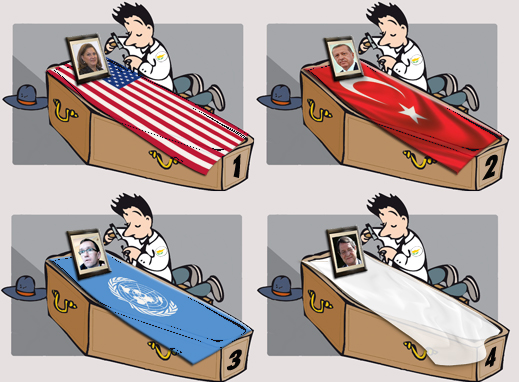
In the dark of Monday night before light broke on Tuesday, Cyprus, the small Mediterranean island invaded and occupied for 42 years  by Turkish troops with US and UK backing,  began a revolution its president, Nicos Anastasiades (lead image, 4),  doesn’t want.

The collapse of negotiations between the Greek Cypriot and Turkish Cypriot communities, arranged by United Nations (UN) officials at the Swiss resort of Mont Pèlerin, was confirmed by a UN communique issued at 1:30 in the morning. “They have not been able to achieve the necessary further convergences on criteria for territorial adjustment that would have paved the way for the last phase of the talks,” the bulletin announced.  “The two sides have decided to return to Cyprus and reflect on the way forward.”

“The Americans, the Turks, the European Union, and the British were sure there’s no deal  Anastasiades could not be persuaded to accept,” said a senior Cyprus official,  now retired,  “so long as there’s  a large enough percentage in it for himself. Anastasiades’s weakness is his personal corruption. This time, though, the Turks raised their bid too high. The Americans lost their cards in their election on November 8. The British aren’t players in Europe now. And for the first time there was a display of Greek and Russian power which has changed the game entirely. Greece first, then Russia have cut the legs off the negotiating table – Anastasiades’s legs too.” (more…)