- Print This Post Print This Post

By John Helmer, Moscow

Since the American war against Russia began in 2014, the market for Russian art has been driven by rich Russians running away, both buyers and sellers, as well as Americans making disposals. This week, in the semi-annual London auctions, there was a surge of demand for the art which American Russia-haters, not to mention the Kremlin and the Russian Church, have reviled, particularly this year. Soviet art – the celebration of the post-1917 values of secularism, republicanism, socialism, anti-imperialism —  hit prices never recorded before. For the first time in the second century of the Russian republic, revolution fetched a higher price than reaction.    (more…)

- Print This Post Print This Post

By John Helmer, Moscow

 The arrest and indictment of Suleiman Kerimov in Nice last week on charges of tax fraud and money laundering have begun loosening the tongues of international bankers and commodity trade financiers who have done business with Kerimov in the past, and who have been  guests at his Cap d’Antibes villa parties.

They say Kerimov’s wealth is illusory and exaggerated by the press, because his assets are heavily leveraged by bank loans which can be called in by material changes in borrower condition; Kerimov’s arrest may be one of them.

The sources also believe the money for Kerimov’s villa purchases in Cap d’Antibes, which are the target of the French prosecution, originated from Russian state banks.  “The international banks largely dropped Kerimov’s business after 2008 when the share value securing his borrowings collapsed, and he had to sell up,” comments a source who was involved in financing for Kerimov before the crash. “Since then he’s been a dependent of Sberbank.  The Sberbank officials knew he was high risk, and they treated him like a slave. Kerimov had to kiss their feet.”

Investigations in Nice, Moscow and Switzerland, where Kerimov’s asset holdings are managed, confirm that Kerimov’s chief creditors today are the state banks, Sberbank and VTB, run by German Gref and Andrei Kostin. A smaller line of credit has been extended by a third state lender, Gazprombank. The international bankers say they don’t know whether Russian state bankers are also beneficiaries of the villas at Cap d’Antibes.

In Moscow there is nervousness over what Kerimov’s telephone conversations, tapped by  French prosecutors, have revealed already; and what he will admit under interrogation about who may be the owners of the real estate, if not himself.   An international bank source believes the real villa owners aren’t Russian bankers. “They don’t like people like Kerimov,” the source says. “Certainly not [Sberbank chief executive German] Gref and [VTB chief executive Andrei] Kostin. They are independently rich; they don’t need guys like Kerimov. They would not put themselves into Kerimov’s hands. These houses are never worth what the papers are reporting but they are all Kerimov’s stuff.  That’s been his business style. He buys assets in bagloads – bank shares, commodities, real estate. But now the market has turned like it did for his other assets. You can’t sell a house on the Cote d’Azur at the price Kerimov paid. His business is show business. That’s caught up with him now.” (more…)

- Print This Post Print This Post

By John Helmer, Moscow

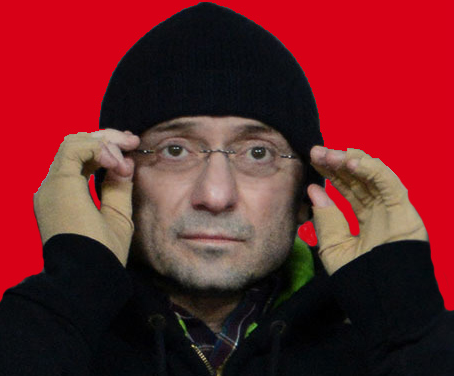
Evasion of French taxes is the criminal case against Suleiman Kerimov (lead image, rear left), who was jailed in Nice on November 20; indicted two days later; then released on €5 million in bail, his passport confiscated and his freedom curtailed by French police surveillance which may last for years, before the French judicial process is complete.

If convicted on the charges, Kerimov faces a penalty of ten years in prison. If he pleads guilty, pays the back taxes, a money fine or asset forfeit, he may be released to return to Russia. There, the French evidence and Kerimov’s plea will prove he is liable to criminal violations of the Russian law on disclosing offshore assets, and of failing to pay Russian taxes on the money used to acquire them. A Russian prosecution of Kerimov would then become the basis for a criminal prosecution for money laundering in Switzerland against the entities through which Kerimov has operated, and the Studhalter family which has served as his agents for more than a decade.

For the Kremlin, the Kerimov affair represents as great a criminal case as the trial, thirteen years ago, of the oligarch Mikhail Khodorkovsky – except that this time the courts, prosecutors, and jailors in Kerimov’s case are all impeccably French. Not a single Russian lawyer, journalist, publication, radio or television broadcast has noticed. The silence is deafening. (more…)

- Print This Post Print This Post

By John Helmer, Moscow

Sergei Frank, a former federal transport minister and chief executive of the state shipping company Sovcomflot since 2004, is unique among Russian state officials. He is the only one to have been adjudicated by a series of UK judges to have lied, been dishonest in evidence-gathering, and vindictive in his use of the courts against business rivals. 

This week in London, in a unanimous ruling by three judges of the Court of Appeal, Frank has been judged to have foolishly postponed the day of reckoning by unjustified criticism of his judges, and ordered to pay $75 million to a UK-based Russian shipowner. This puts an end to the 12-year vendetta which Frank has waged over allegations which this week’s ruling says were properly “dismissed because the transactions were not dishonest or in breach of trust”.

Frank is also unique among Russian state officials. Despite all the judgements against him, and the millions of dollars of penalties for his misjudgements which Sovcomflot has had to pay, he hasn’t been sacked. Not yet. (more…)

- Print This Post Print This Post

By John Helmer, Moscow

President Vladimir Putin is the bee’s knees. There’s noone to beat him, electionwise. But when it comes to feeding Russians the genuine article, Putin’s promise is a honey trap. Naturally, we are talking only of the business of Russian beekeeping, honey production and trade.

Eighteen months after Putin listened to a Kemerovo region beekeeper complain that adulterated and counterfeit honey products imported from abroad were driving genuine Russian honey out of the market, the president said he would order the government to investigate. The study which followed early this year has confirmed the economic damage adulteration is doing to the Russian bee business, and proposed to combat it with tighter regulations and more comprehensive testing.  But the packers and retailers of fake honey have successfully lobbied Putin to sit on his hands. Nothing has happened – except that Russian production of honey is now falling. .

“The share of Russian natural honey on the domestic market used to be 94%,” says Arnold Butov, president of the Russian National Union of Beekeepers (RNSP). “ But this is decreasing. Some organizations and enterprises make honey with additives to increase the weight and sweetness of the product, making it easier to pour. These products are becoming more popular among consumers, and retailers prefer them to natural honey. We tried to appeal to the responsible governmental organizations, but were ignored. Someone there is lobbying the interests of retailers. The Bashkiria Republic government supports its honey producers very well. That can’t be said about the federal government, where control of honey production is very weak. We are writing a letter to President Putin in order to demonstrate the problems, and we hope that before 2021, when Apimondia, the international federation of beekeepers’ associations, is scheduled to convene at Ufa, in Bashkiria, some of these problems will be solved.” (more…)

- Print This Post Print This Post

By John Helmer, Moscow

President Vladimir Putin’s campaign to repatriate Russian capital from offshore havens, and to force the well-known Russian oligarchs to return their cash and assets to Russia, took a leap forward on Monday evening in Nice, France. That is when French police arrested Suleiman Kerimov (lead image), and refused to accept that the diplomatic passport he was eligible to carry, issued by the Russian Foreign Ministry in Kerimov’s capacity as a senator of the Federation Council for Dagestan, provided him with the immunity Kerimov protested that it did.

(more…)

- Print This Post Print This Post

By John Helmer, Moscow

December approaches, opening the last stretch of the presidential election campaign that  concludes in sixteen weeks’ time, on March 18.

What to watch for as President Vladimir Putin holds his December meetings with the oligarchs who rule Russia’s future, and the voters who will be the victims of it?  As the Russian Orthodox Church has warned, beware the ruler who is pragmatic, and the 16th century Italian, Niccolo Machiavelli – Satan’s finger, according to holy sermons —  who teaches rulers not simply to lower moral standards, but to abolish them entirely.

Not for the Church can the presidential election be a Machiavellian choice between greater and lesser evils, between means justifying ends, between material prosperity and spiritual poverty.  “The devil is not a fairy tale,” a recent Church homily argued, “he is a brilliant strategist and psychologist, and he is supremely real. The arguments of Machiavelli [are] his most successful deception to date… Machiavelli was the inventor of hypocrisy, since he was the inventor of propaganda. He was the first philosopher who wanted to change the world by propaganda.”

Propaganda cannot be the method, the Russian Church preaches; nor hypocrisy the presidential election outcome. However, between propaganda and hypocrisy, that’s what half the Russian electorate thinks is the choice. According to the Levada Centre poll  released this week, 42% of voters say the election outcome will make no difference to their lives; 45% believe it might; 13% are uncertain and so distrustful of the pollster they won’t say anything.

So how close, or how far from Machiavelli’s model ruler, is Putin the frontrunner, and what does the president himself think of Machiavelli? (more…)

- Print This Post Print This Post

By John Helmer, Moscow

The Russian state bank VTB has corroborated its role in managing a complicated set of loans, insider transfers and repurchase agreements for Oleg Deripaska’s aluminium and electricity holding, EN+, which issued global depositary receipts on the London Stock Exchange last week. Since the listing, the Russian group has lost $140 million in market capitalization. An international banker in London commented that the listing “breaks new ground, not to say exchange rules, for a share that isn’t a share and for a free float that isn’t either.” (more…)

- Print This Post Print This Post

By John Helmer, Moscow

Last week, the first week in the life of Russia’s EN+ Group on the London Stock Exchange, Oleg Deripaska (lead images), control shareholder and chief executive, took $500 million in cash for himself, then triggered a $112 million loss for the other shareholders led by the Russian state bank, VTB.  

This followed an investigation by the UK’s Financial Conduct Authority (FCA) of EN+’s application to list and trade global depositary receipts (GDRs) instead of ordinary shares,  which Deripaska will not be listing at all.  Approval for the listing on the London exchange was given on condition that Deripaska published a series of investment warnings and liability disclaimers at the head of the EN+ prospectus, which was issued on November 3. In capital letters, investors were warned: INVESTMENT IN THE GDRS [of EN+] INVOLVES A HIGH DEGREE OF RISK. PROSPECTIVE INVESTORS SHOULD READ THE ENTIRE PROSPECTUS, PARTICULARLY, THE SECTION HEADED ‘‘RISK FACTORS’’, WHEN CONSIDERING AN INVESTMENT IN THE COMPANY.”

London sources say the market took this warning so seriously, there is almost no investor  demand for the shares. Sold to a group of insiders at $14 before trading commenced last week, the issue of 112.1 million shares fell towards $12.80 before price support was observed. At a current price of $13 per GDR (equals one ordinary share) $112.1 million in market capitalization has already been lost. (more…)

- Print This Post Print This Post

By John Helmer, Moscow

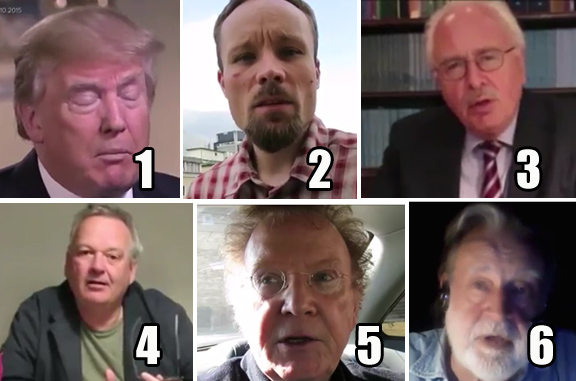
It’s possible Donald Trump meant the little he has said about who was responsible for the destruction of Malaysia Airlines Flight MH17 over Ukraine in July 2014.  If he did, he didn’t mean it for long.  If he didn’t mean what he said, with the retrospect of two years that comes as no surprise.

On MH17 there’s now no difference between former President Barack Obama, defeated presidential rival Hillary Clinton, and Trump.  Trump has done nothing to answer with the evidence at the disposal of the incumbent president what the US Government knows about who and what shot down the aircraft, killing all 298 people aboard. (more…)