- Print This Post Print This Post

By John Helmer, Moscow

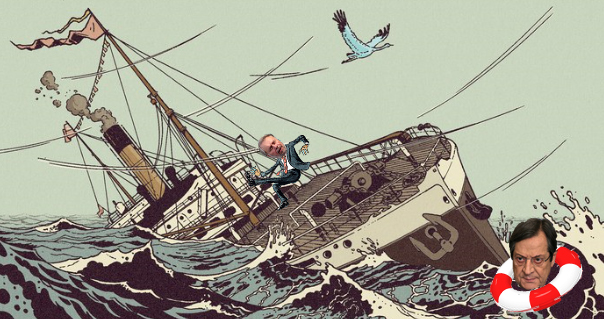
Leonid Lebedev (lead image, centre), a Russian oil and electricity trader and patron of  Cyprus President Nikos Anastasiades (right),  is set to lose his multi-billion-dollar claim for a stake in the sale of TNK-BP to Rosneft, according to papers  released by the New York State Supreme Court. The Rosneft deal, priced in March 2013 at $55 billion,  created Russia’s dominant oil producer, and one of the world’s most valuable petroleum companies by revenue and market capitalization.  Its current market value is Rb4.4 trillion ($66 billion).

Lebedev has been claiming in the New York court since 2014 that he is owed $2 billion for a 15% share he once held in the Russian oil company, Tyumenneftegas (Tyumen Oil Company); TNK was the Russian acronym until British Petroleum bought into the company and it became TNK-BP between 2003 and 2013.

Lebedev has sued Victor Vekselberg and Len Blavatnik, alleging that their agreement for the sale of his shareholding for $600 million between 2001 and 2003 had not been completed or paid up.  Vekselberg, who is Russian,  and Blavatnik, Anglo-American,  say they paid Lebedev his money, and that he has been lying and fabricating evidence ever since.

In a hearing held by Judge Salliann Scarpulla on November 14, but kept sealed until a month ago, the judge strongly hinted that she will not allow the case go to trial. She has already dismissed  Lebedev’s claims of fraud and deceit by Vekselberg and Blavatnik. That left Lebedev’s claim for breach of the sale contract.

Scarpulla told lawyers arguing Lebedev’s case that she didn’t believe he had not agreed to the $600 million sale through the Cyprus-based company he had created to act his agent, Coral Petroleum.  After concealing Coral Petroleum’s bank transaction records and accounting records for years, they were discovered last year at BNP-Paribas.

The discovery was “explosive”, the lawyers declared in court. “We literally have hundreds, a box full of directions signed by Mr. Lebedev to spend money on Coral’s behalf. This was all before the defendant’s [$600 million] money even came into Coral.”

“You can imagine how this sounds,” the judge declared in court. “I have an agent, I tell my agent to sign the Agreement, the Agreement contains very broad language, and because later on I find out that the Agreement is not helpful or useful to me, all of a sudden, one, my agent didn’t have authority, which I don’t know how you [Lebedev’s lawyers] can really argue that because if the agent [Coral Petroleum] signs the Agreement, the law in New York is you’re bound. You haven’t shown me anything that would let the defendants [Vekselberg and Blavatnik] know that the agent [Coral Petroleum] didn’t have apparent authority to sign the Agreement. Two, the Agreement [between Lebedev’s Coral Petroleum and agents for Vekselberg and Blavatnik] says what it says and you admit that either your client [Lebedev] or your client’s representatives negotiated it. It was everything in that Agreement then. Your client had the ability to change or at least to discuss or do whatever. So, again, I’m at the position where you’re asking me to sort of find an ambiguity in something that seems not that ambiguous.” (more…)
- Print This Post Print This Post

By John Helmer, Moscow

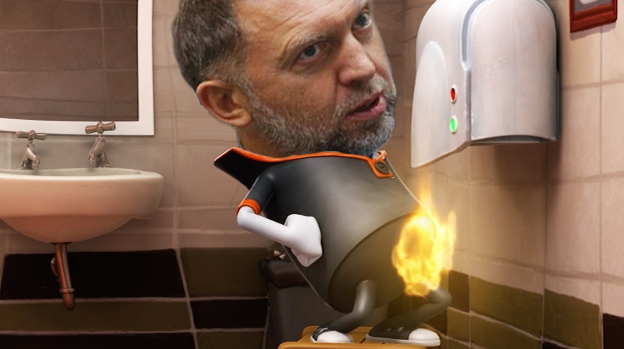
For the first time in Oleg Deripaska’s 95-lawsuit history in the British High Court, the aluminium oligarch has been judged by the court to be a liar, a thief, and a thug.

“By force or threat of force,” Justice Sir Nigel Teare declared in a judgement published last week, Deripaska had seized a valuable site in central Moscow, evicting its lawful owner, Vladimir Chernukhin,  in 2010. About his business dealings over the property Deripaska “gave false evidence” himself in court as well as inducing his employees and business associates to do the same in their testimony. “Mr. Deripaska has given dishonest evidence to the court as he did to the arbitrators,” the judge ruled. “What his motive was for doing so is known only to himself.” “I formed the view that it would be wholly unsafe to rely upon his evidence.”

The result of the judgement is that Deripaska must pay about $100 million to Chernukhin, a former deputy finance minister and runaway state banker, who has lived in London since 2004. 

In a statement issued in Moscow last week by one of Deripaska’s companies, Russian Aluminium (Rusal), he called the judgement “biased and unfair”.   (more…)

- Print This Post Print This Post

By John Helmer, Moscow

Orthodoxy, Autocracy, Nationality, the triad of Tsar Nicholas I (lead image, left), is no longer as dead as tsardom. It has been revived by Patriarch Kirill (right), leader of the Russian Orthodox Church; backed by the Kremlin; and is now unopposed by the Communist Party of the Russian Federation and its leader, Gennady Zyuganov (centre). (more…)

- Print This Post Print This Post

By John Helmer, Moscow

The head of the Russian Orthodox Church, Patriarch Kirill (lead image, 2nd from left) , has proclaimed his church the sovereign  equal of the Russian state, and himself the political equal of the Russian president. The power transfer took place at a Kremlin ceremony last week in front of President Vladimir Putin (left).

“For the first time in Russia’s history,” Kirill’s declaration was reported by the state news agency Tass, “such a relationship has established itself between the Church and the state. Because even in the times of the Russian Empire, the church did not have an equal partner in the face of the government. It had always been subordinate to certain government institutions.”  

Russian politicians and constitutional lawyers are slow, and also fearful, to publicly challenge the combination of Kirill and Putin. From a survey of these sources in Moscow, one responded: “Does  the Pope claim to be the equal of the Italian President or Prime Minister? The Archbishop of Canterbury the equal of the British Queen? The Saudi King in a power-sharing deal with the Grand Mufti? Or Netanyahu the equal in Israel of the Chief Rabbi? The answer is obvious. Only in Russia would a churchman dare to make this claim, and violate the rights of all Russian citizens in the Constitution.”

“Nobody may usurp power in the Russian Federation”, proclaims Article 4 of the Russian Constitution. The Church may regard the patriarch as divinely appointed, but Vladimir Gundyayev, the civil name of Patriarch Kirill, qualifies constitutionally to be that nobody. So too are his senior associates on the Church’s ruling body, the Holy Synod  – Metropolitans Varsonofy (Anatoly Sudakov,  2nd left), Chancellor of the Synod and Finance Minister; Tikhon (Georgiy Shevkunov, 3rd left) , National Security Advisor; and Hilarion (Grigoriy Alfeyev, right), Foreign Minister. According to the Constitution, “the seizure of power or usurpation of State authority shall be prosecuted under federal law.”

Constitutional experts also believe Kirill’s declaration violates the Russian Constitution’s Article 14:  “The Russian Federation shall be a secular state. No religion may be established as the State religion or as obligatory.” (more…)

- Print This Post Print This Post

By John Helmer, Moscow

Sergei Skripal poisoned himself by accident on March 4, 2018, in the centre of Salisbury. At the time  he was engaged in an operation, freelance or official, which was known to the British intelligence agency MI6. The two Russians, Anatoly Chepiga and Alexander Mishkin, who visited Salisbury on March 3 and during Skripal’s fateful afternoon,  were a signal from the Russian  military intelligence agency GRU that the Russians knew in advance what Skripal was doing, and wanted the British to know they knew. The two Russians never made it to the front door of the Skripal house in Salisbury; the door-handle wasn’t poisoned; there was no contact between Skripal,  Chepiga,  Mishkin.   Their affair had nothing to do with the subsequent death of Dawn Sturgess after she was poisoned at her companion’s home in Amesbury, near Salisbury, on June 30.

By British legal standards of proof beyond reasonable doubt or the balance of probabilities, there is no case to answer of either attempted murder or chemical warfare.

There is another, more ancient standard for coming to this conclusion.  In the mid-14th century William of Ockham, an English born and Oxford educated cleric, promulgated the maxim that deduction from multiple and competing hypotheses should be made as simple as necessary. His idea has been called, metaphorically, Ockham’s razor. Strop the razor on this dossier,  and then try the razor on the Skripal case for yourself. (more…)

- Print This Post Print This Post

By John Helmer, Moscow

A bad smell is emitted by those who go about their business claiming to be more virtuous than others when they are not. Take Keith (Konstantin) Gessen’s (lead image) newly published autobiography cum novel about his time in Moscow. The word for the book is a cross between the noun fart and the adjective virtuous; that’s to say, fatuous.

Six blurb endorsements covering the dust-jacket can’t improve on this because the endorsers have no expertise or experience of Russia, and are obligated to Gessen personally, institutionally or commercially, by way of Harvard University, Columbia University, the New Yorker, and Gessen’s personal magazine N+1.  In short, they are back-scratchers, log-rollers.

In New York Yiddish, the term for them is mishpocha. That means the family of people who understand what the word means; for them it’s a mitzvah (good deed required by religious duty) to help each other make money.  If you know the meaning of both words, you are ready for the Woody Allen world in which Gessen makes his money. Make that the Woody-Allen-world-before-the-sex-and #MeToo-scandals.

If there’s a difference between that world and the Russia which Gessen’s book claims to be about, this  doesn’t matter to him, and especially not to the mishpocha, whose mitzvah it is to tell you to buy this book.  If you are resisting, there’s a reason for those of you who don’t belong to the mishpocha and who don’t come from New York, to continue reading this review. That’s because Gessen, Russian born and Russian taught though he is, is a perfect example of the American inability to understand two vital lessons for American-Russian relations for the foreseeable future.  

Lesson No. 1:  Americans, the alt-right, alt-left, Clintonites, Trumpies, CIA, FBI and Pentagon  — all of them have failed to understand Vladimir Putin, particularly his weaknesses. Lesson No. 2 follows: the war the US has launched against Russia, a war no American is capable of stopping now, or even slowing down, will produce the very opposite of its regime-changing goal. This opposite, this outcome, is the Stavka – a military regime which has the capital, the force multiple,  the intelligence,  and the relative lack of corruption to defeat whatever Russia’s enemies  throw at it, and enjoy popular approval for doing so.  By the way, the Stavka will have an articulate civilian for spokesman – that’s Vladimir Putin.   (more…)

- Print This Post Print This Post

By John Helmer, Moscow

The Wiltshire county police have revealed in separate statements last week that they were at the house of Sergei Skripal within minutes of his having fallen ill on a park bench in the centre of Salisbury last year, in the case which has damaged relations between Britain and Russia beyond foreseeable repair.  

The speed of response was much faster than Wiltshire Police and Crime Commissioner Angus Macpherson has given reason for at the time; in the eleven months of his tweeting after the incident; or under direct questioning over several days of last week.

“We can confirm that police attended Christie Miller Road in Salisbury on the evening of 4 March 2018”, Macpherson said through a spokesman, “as part of our early enquiries into the incident.” That was not an answer to the question Macpherson was asked.

The new police evidence — an excerpt from the Wiltshire police incident response log and Macpherson’s cover-up of the particulars —   contradicts the allegations the British government and police in London have made that the outside door-handle of the Skripal house had been sprayed by Russian assassins with a “military grade nerve agent” named by the British authorities as Novichok.

(more…)

- Print This Post Print This Post

By John Helmer, Moscow

The Wiltshire county coroner David Ridley admitted this week that he held a 14-minute hearing into the death of Dawn Sturgess, alleged victim of a Russian Novichok attack last July, but after six months of further  investigations by police, military, intelligence and toxicology experts,  he still cannot hold a formal inquest and decide what caused her death.  

This admission by the coroner, the scheduling of a new coroner’s court hearing on April 15, and the likelihood that this too will be adjourned, now threaten the British Government’s narrative that a Russian-produced nerve agent, sprayed on to a door handle last March, was an attempted assassination of Sergei Skripal, and that four months later, a bottle containing the same poison killed Sturgess.   

The admissions from Coroner Ridley on Monday were made as the European Union, prodded by the British Government, has announced new travel bans against the Russian military intelligence agency accused of the nerve agent attacks. “Today’s new sanctions,” British Foreign Secretary Jeremy Hunt said on Monday,  “deliver on our vow to take tough action against the reckless and irresponsible activities of the Russian military intelligence organisation, the GRU, which put innocent British citizens in serious danger in Salisbury last year.”

Coroner Ridley acknowledges there is no substantiation for Hunt’s allegations in a court of law. Not now, not yet. (more…)

- Print This Post Print This Post

By John Helmer, Moscow

When Gennady Zyuganov (lead image, right) spotted dirt on Oleg Deripaska’s hands (lead image, left) this month in the State Duma, it was the first time in two decades that the leader of the Russian  Communist Party has noticed; or at least dared to say so in public.

Was Russia’s leading communist taking his lead from the US Treasury, which last April imposed sanctions on Deripaska, accusing him of “money laundering… threatening the lives of business rivals, illegally wiretapping a government official, and taking part in extortion and racketeering.”  Was the Communist Party of the Russian Federation (KPRF)  taking its cue from this month’s US Senate Resolution No. 2,   attacking the lifting of sanctions on the ground that Deripaska’s control of the state aluminium monopoly Rusal “is just as tight as it was before”?  (more…)

- Print This Post Print This Post

By John Helmer, Moscow

The British state broadcaster BBC and other media have disclosed that the Salisbury house (lead image) owned by Sergei Skripal is to be partially demolished and rebuilt over the next four months.  

A Wiltshire Council notice to residents in the neighbourhood of the Skripal home is the source of the news reports. The January 4 notice, a media briefing by the Wiltshire Council, and a press release by a spokesman at the Ministry of Defence do not say how much of the house will be reconstructed. “We are working with the site owner, Wiltshire Council and other partners to ensure that the house will be fully repaired and returned to a fit state to live in,” the anonymous Defence Ministry official was quoted as saying by the Salisbury Journal. 

The British Government, London and Wiltshire police, and media reports have claimed that a fast-acting, lethal nerve agent was administered to the handle of the front-door of the Skripal house eleven months ago, on March 4. The alleged attackers have been identified by Prime Minister Theresa May (lead image, left) as two Russians. No allegation nor evidence has been reported to date that they or their poison penetrated inside the Skripal residence.   

Two senior Wiltshire Council officials, Tracy Daszkiewicz, Director of Public Health and Protection, and Alistair Cunningham, coordinator of the recovery programme, were asked to clarify how much of the Skripal house will be replaced. Replying today through spokesman David Perrett, they said “there are no plans to demolish the property at 47 Christie Miller Road. The roof and garage roof are being removed and replaced.”

Because the front-door handle was the sole identified site of the attack, and decontamination has been under way for eleven months, the two officials were asked to explain their reason for the reconstruction.  “Every decontamination site is different”, Perrett responded. “Each one has a tailored decontamination plan. As you would expect this site is more complex than others… we are taking a highly precautionary approach and that is why the clean-up work is so extensive and meticulous. It is vitally important we are thorough on all the sites so that local residents can be fully confident that each one is safe when returned to use.”

Perrett added: “In the more contaminated sites some hard surfaces might be removed.”

Angus Macpherson, the Wiltshire police commissioner, told the press on Monday  that Detective Sergeant Nick Bailey, who entered the Skripal house on the evening of the poison attack and who was hospitalized later for nerve agent exposure,  returned to active duty this week. Bailey has told the BBC he has “lost everything”    in his house.  Commissioner Macpherson, together with Daszkiewicz and Cunningham, were asked to say if the Bailey house is also to be demolished and why. Through Perrett, they answered. “Sgt Bailey’s house has been fully cleaned. There are no plans to demolish this property.”

(more…)