By John Helmer, Moscow
Journalism is war by other means. If you don’t understand this you are either an enlisted soldier or a casualty with a serious head-wound. On the ground covered by journalism it’s impossible to hide; innocent civilians are inevitably caught in the cross-fire.
Most Russians have known this since the start of the nineteenth century.
After Anton Chekhov’s reports from Sakhalin were published between 1891 and 1893, Russian journalism didn’t recover to his standard for fifty years. It began again at the German invasion on June 22, 1941. But it lasted for just four years – until the Red Army victory in Berlin and the capitulation of the Germans in May 1945.
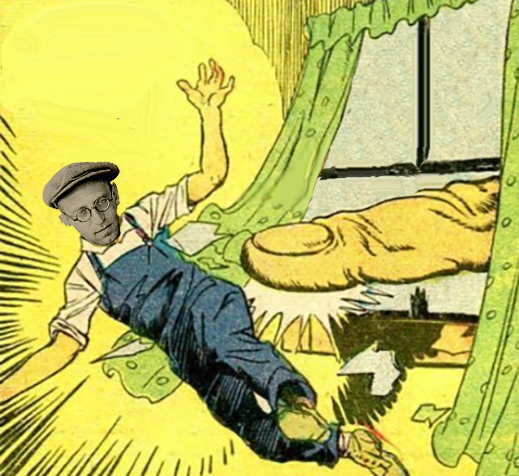
Vasily Grossman (lead image) was one of the very best of the Russian reporters on the front in that brief period. He far excelled his English-writing peers on other fronts, particularly American fakers like Ernest Hemingway.
A new biography of Grossman, published in the US, reveals in Grossman’s own words why he is still a model of the genre in Russian. It also explains how and why he was silenced on orders of Josef Stalin, and his major book, combining his battlefield notes and interviews, banned from 1961 until 1988.
“Evil is overthrown”, Grossman reportedly said to another Russian correspondent on the roof of the Reichstag on May 2, 1945. Just for the time being, he acknowledged later on.
There can be no irony, just dismay that Grossman’s biography demonstrates that the biographer, Alexandra Popoff, a Russian turned Canadian, and her publisher, the Yale University Press, have no comprehension of what Grossman meant, nor of his lesson for journalism the world over – that evil isn’t overthrown. That today, as you read this, it’s alive and well in Canada and at Yale University, not to mention Berlin (again), Paris, London, Washington, and not to forget, Moscow (again). Grossman the Russian soldier is on the opposite side from Popoff the American soldier. (more…)