 [1]
[1]
By John Helmer, Moscow
@bears_with [2]
Made public for all to see, Russian Foreign Minister Sergei Lavrov has just declared that escalation of the US war at sea against Russia’s trade routes and shipping fleets is the “opposite” of the Anchorage formula which President Vladimir Putin and his spokesman insist is still “fundamental [to] move the settlement process forward and allow for a breakthrough.”
The Russian Navy is on Lavrov’s side. Kirill Dmitriev and the Russian oligarchs are with Putin’s spokesman, Dmitry Peskov.
According to Admiral Alexander Moiseyev – submariner, former commander of the Black Sea and Northern Fleets, now chief of the Russian Navy – the Navy’s role must now be to “ensure maritime economic security, freedom and safety of navigation, protect economic interests, and prevent the loss of civilian vessels and growing threats to the Russian Federation.”
Equally public, if also discreet, the Kremlin national security adviser Yury Ushakov has declared that in this month’s direct talks between the Russian and Chinese security council chiefs and then between President Putin and President Xi Jinping there is a serious point of disagreement. “Their approaches almost fully coincide,” Ushakov has announced. He is pointing at the black hole where “their approaches” do not “coincide”.
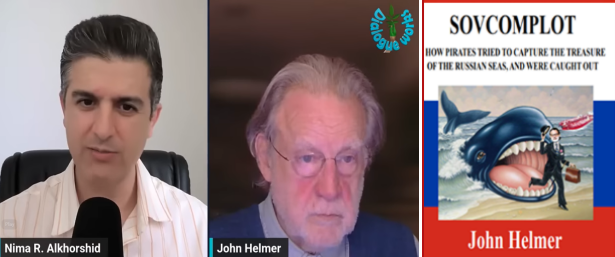
In the new Dialogue Works podcast with Nima Alkhorshid, the discussion focuses on this escalation of war, and the impact it is having on all of Russia’s allies, including India and Iran, as Trump Administration strategy attempts to split and scatter them all.
[…more]
Click to view or listen to the podcast here [3]. For the history of Putin’s decade of uncertain and contradictory decision-making for Russia’s fleet, read the book, first published in 2023 [4].
 [5]
[5]Left: https://www.youtube.com/watch?v=R0gljV7weFQ [3] Right: https://www.amazon.com/dp/B0CH2CM8W7 [4]
Here is the text of Lavrov’s February 9 statement on the Anchorage formula: “For all the statements from President Donald Trump’s administration to the effect that the war in Ukraine started by President Biden should be ended, that we should come to terms and remove it from the agenda, and that supposedly then we would see bright and clear prospects of Russian-US mutually beneficial investment and other interaction, the administration has not challenged all the laws adopted by Joe Biden to ‘punish’ Russia after the start of the special military operation. In April 2025, they extended Executive Order 14024, on the emergency regime, the core of which is the ‘punishment’ of Russia and sanctions against our country, including the freezing of Russia’s gold and currency reserves. That document mentions ‘harmful foreign activities of the Government of the Russian Federation.’ Examples include efforts to undermine the conduct of elections in the United States (something that US President Donald Trump speaks against daily, categorically rejecting all this) and the violation of international law and human rights. You can find anything there!”
“This is all pure ‘Bidenism,’ which President Trump and his team reject. Nevertheless, they have easily pushed through the law and sanctions against Russia, which continue to be in effect. They have imposed sanctions against Lukoil and Rosneft. And they did it in the autumn, a couple of weeks after a good meeting between President Putin and President Trump in Anchorage. They tell us that the Ukraine problem should be resolved. In Anchorage, we accepted the US proposal. If we regard it ‘as gentlemen’, it means that they proposed it and we agreed, so the problem could be resolved. President Putin has said on many occasions that it is not important for Russia what Ukraine and Europe are going to say; we can clearly see the primitive Russophobia of most regimes in the European Union, with rare exceptions. The US position was important to us. By accepting their proposal, we seem to have completed the task of resolving the Ukrainian issue and moving on to a full-scale, broad-based and mutually beneficial cooperation.”
“So far, the reality is quite the opposite: new sanctions are imposed, a ‘war’ against tankers in the open sea is being waged in violation of the UN Convention on the Law of the Sea. They are trying to ban India and our other partners from buying cheap, affordable Russian energy resources (Europe has long been banned) and are forcing them to buy US LNG at exorbitant prices. This means that the Americans have set themselves the task of achieving economic domination. Furthermore, while they ostensibly made a proposal regarding Ukraine and we were ready to accept it (now they are not), we do not see any bright future in the economic sphere either. The Americans want to take control of all the routes for providing the world’s leading countries and all continents with energy resources [6].”
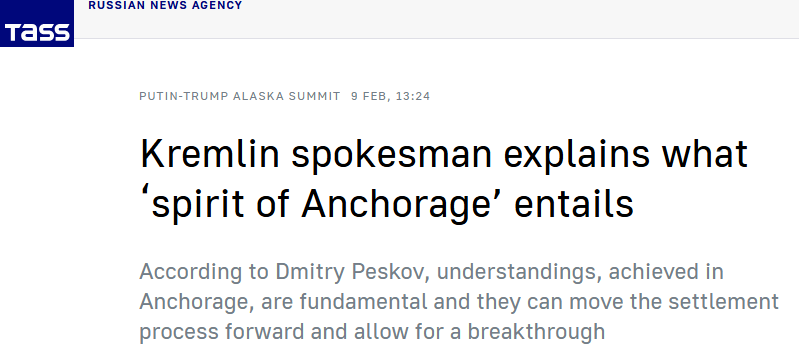
Putin’s spokesman, Dmitry Peskov, replied three hours later on February 9:
 [7]
[7]“The ‘spirit of Anchorage’ reflects a set of mutual understandings between Russia and the United States that are capable of bringing about a breakthrough, including in the settlement between Moscow and Kiev, Kremlin Spokesman Dmitry Peskov clarified. ‘There is a whole range of understandings that were reached in Anchorage, which were already discussed even before Anchorage, during Mr. [Steve] Witkoff’s visit here,’ the Kremlin spokesman explained [8], responding to a question about what this ‘spirit’ entails. ‘And it was after this that the need for a summit meeting arose. This set of understandings that was reached is precisely the spirit of Anchorage,’ Peskov stated. ‘These understandings, achieved in Anchorage, are fundamental, and it is these understandings that can move the settlement process forward and allow for a breakthrough.’ Peskov added that the Kremlin would not like to ‘delve into the details’: ‘We remain convinced that it is in the interest of the matter to conduct these talks in a closed format, not to engage in some kind of public, megaphone diplomacy.’
To follow the news of the US war against Russia at sea, start with the list of US-sanctioned tankers – the so-called black, ghost, shadow, or phantom fleet – totalling 1,300. The number of Russian-flagged vessels on this list [9] is 204; that’s 16%. Bloomberg, an outlet for US intelligence releases, and the international maritime media are reporting an acceleration in the reflagging of tankers to the Russian registry since December [10]. “More than two dozen sanctioned tankers have switched to a Russian flag since the start of December as a means of avoiding seizure by U.S. forces…As many as 26 tankers are currently sailing under a Russian flag, compared to only six in November and 14 for the five months to November…The switches accelerated after the United States seized the tanker Skipper off the Venezuelan coast in early December.”
The Skipper (also known as Adisa) was flagged in Guyana when it was boarded and seized by the US in the Caribbean in December. It was carrying a cargo of Venezuelan oil. The Trump Administration’s legal basis for most of the tanker seizures is not public [11]. “Although US authorities have purportedly filed warrants to seize dozens more tankers linked to the Venezuelan oil trade, only two warrants have been unsealed to date: authorizations for the seizure of the M/T Skipper (previously known as the Adisa) and the Bella I (now known as the Marinera), both of which were sanctioned for their involvement in supporting Hezbollah and the Quds Force, one of the branches of Iran’s Islamic Revolutionary Guard Corps. At least three other seized vessels—the M/T Sofia, the Olina (formerly the Minerva M), and the Sagitta—were sanctioned in January 2025 pursuant to US sanctions on Russia.”
The Sofia was Russian-flagged at the time; the Olina was Guyanese-flagged; the Sagitta, Sao Tome & Principe.
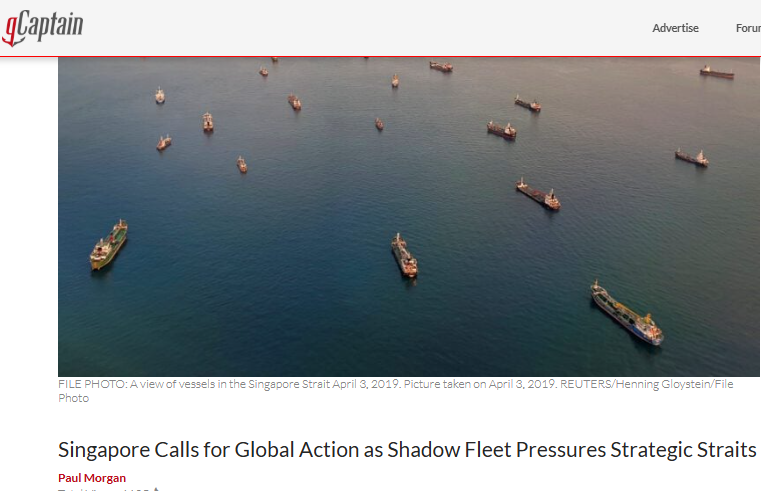
Follow the war at sea day by day from the Caribbean to the Baltic, the Atlantic to the Indian and Pacific, in the international maritime media:
 [12]
[12]Source: https://gcaptain.com/singapore-flags-shadow-fleet-risks-in-strategic-straits/ [13] and https://gcaptain.com/indias-coast-guard-busts-international-oil-smuggling-ring-as-enforcement-pressure-mounts/ [14] and https://gcaptain.com/u-s-seizes-shadow-fleet-tanker-aquila-ii-in-indian-ocean-after-10000-mile-pursuit/ [15]and https://gcaptain.com/russian-urals-oil-tankers-asia-india-trump-deal/ [16] and https://gcaptain.com/eu-sanctions-georgia-indonesia-ports-russian-oil/ [17]
Follow the fleet flagging trend:
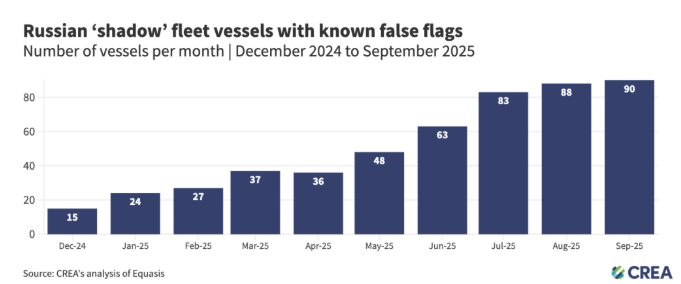 [18]
[18]Source: https://energyandcleanair.org/publication/flags-of-inconvenience-113-vessels-flying-a-false-flag-transported-eur-4-7-bn-russian-oil-in-first-three-quarters-of-2025/ [19] This thank-tank source is based in Finland and financed by the Soros Open Society entities and other anti-Russian groups.
Follow the money as the tanker charter market and the crude oil futures market react to the increasing risk of interceptions, seizures, resistance, and military action by raising vessel rates and commodity prices:
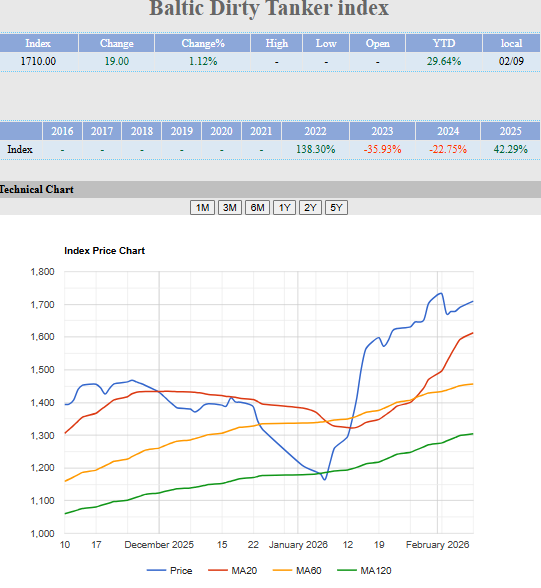 [20]
[20]Source: https://en.stockq.org/index/BDTI.php [21]
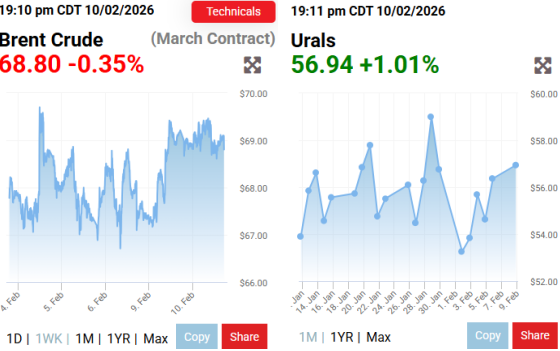 [22]
[22]Source: https://oilprice.com/oil-price-charts/ [23]
A well-informed Moscow source comments that whatever was agreed in Anchorage last August, reflagging now is the prerequisite for military measures to defend the fleet against US or allied attacks. “Even if it is too late now, Russians should start flying the Russian flag, have Russian armed escorts, and treat any action as piracy. They have no right to protect and defend pirate vessels. This show of force and strength is needed for the next few months until a pause is delivered. Trump and his team do not play by any rules; they are not gentlemen; they do not abide by any fine print even if this was agreed.”
The source adds: “This is all a natural extension of the US exploiting its dominance because Putin has played a weak hand from the start. He is not about to go to war with the Americans in any way, shape or form. It may be too late to re-flag the whole tanker fleet and float it as Russian.”
Admiral Moiseyev’s paper recommending Russian Navy intervention was published in the December issue of Военная мысль (“Military Thought”) [24]. Access to the website is currently restricted in some countries, while the article itself is behind a paywall.
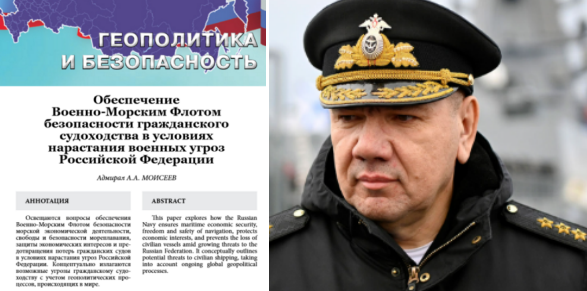 [25]
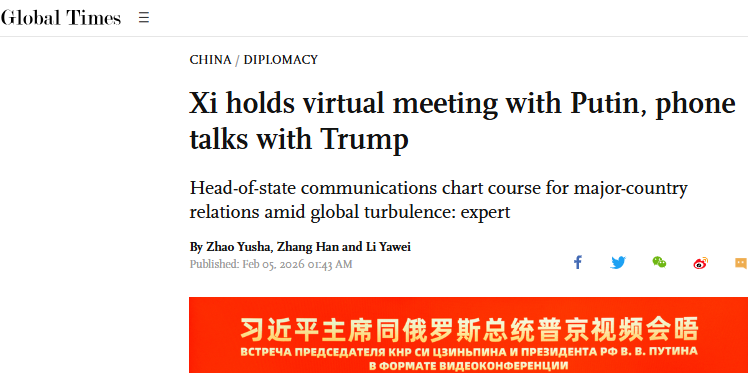
[25]The disclosure of Sino-Russian disagreement at the summit level came from the Kremlin communiqués [26] following the February 4 video conference.
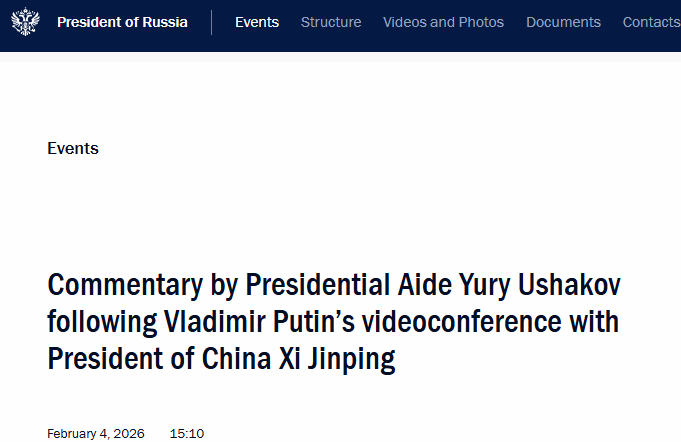
What was unusual is that the Kremlin felt obliged to convey three emphatic interpretations in a commentary [27] by Putin’s foreign affairs adviser, Yury Ushakov. The first, he said, was to reinforce coordination: “it is necessary to maintain permanent bilateral consultation mechanisms across all channels – the security councils, foreign ministries, and defence agencies – to complement their personal communication, that is, the direct dialogue between the leaders. This pertains to the swift alignment and coordination of approaches on current matters, including sensitive ones, to ensure timely responses to emerging challenges and threats.” This is a hint that, following the recent purge by Xi of senior military officers and members of the Central Military Commission, the Russian counterparts at the Defense Ministry, General Staff and Security Council believe they have not been briefed by the Chinese in order to preserve “swift alignment and coordination of approaches on current matters.”
 [28]
[28]Source: http://en.kremlin.ru/events/president/news/79101 [27]
Ushakov’s second point hinted [27] at a breakdown of communication at the senior staff level. “Consultations were held on February 1 in Beijing between Secretary of the Russian Security Council Sergei Shoigu and Director of the Office of the Central Commission for Foreign Affairs of the Communist Party of China Central Committee, Minister of Foreign Affairs of China Wang Yi. The heads of state discussed the information received following these consultations.” This report of the obvious implied that disagreements at the staff and ministerial level were referred to the heads of state for resolution.
Ushakov’s third point was an acknowledgement that Putin and Xi had been able to resolve part of the disagreement [27] but not all of it. “Vladimir Putin and Xi Jinping also exchanged views on their countries’ relations with the United States. Their approaches almost fully coincide, which is evident from their attitude to the US President’s initiative for creating the Board of Peace.” This is a signal that on an undisclosed point or more there remains the same serious Sino-Russian disagreement which was identified in the official Russian communiqué following the meetings in Moscow last December [29] of Foreign Minister Lavrov and Security Council Secretary Shoigu with Chinese Foreign Minister Wang.
In December Lavrov’s communiqué [30] had said after the Wang meeting: “the sides noted overlapping or close positions on all key bilateral and international issues.” As adjectives of separation go, “overlapping or close” imply there were then significant points on which the Russians could not get the Chinese to agree. The Ushakov readout phrase, “almost fully coincide”, continues to expose the unexplained disagreement on something so important the Russians want to reveal it.
 [31]
[31]Source: https://www.globaltimes.cn/page/202602/1354836.shtml [32]
The official Chinese commentary from Wang Yi’s ministry has been so uninformative as to hint that the Russian disclosure of the Putin-Xi disagreement should remain under wraps.
“They had an in-depth exchange of views on bilateral relations and international and regional hotspot issues of mutual interest,” the Foreign Ministry spokesman said [33] in Beijing. “The two presidents have maintained strategic communication in various ways and steered the bilateral relations in the new era to steadily move forward.”
The Chinese read-out [32] which followed hinted at a loss of self-assurance on Xi’s part: “the international community has reached broad recognition of China’s core role and standing in international affairs… China to play a stronger leading role in the transforming international landscape and order… China’s positioning as an anchor for world peace, stability, prosperity, confidence and hope… all parties including the US and Russia have realized that the constructive settlement of these issues is inseparable from China’s participation and must involve full communication, exchanges and dialogue with China. This has made China a core and critical connecting point in current international relations.”